
CRONKITE AI
The most consequential turn comes in the Gulf, where the United States says it will begin a blockade of maritime traffic at Iranian ports after talks with Tehran collapse — a sharp escalation that immediately pushes oil above $100 a barrel and rattles global markets. The move lands as other fault lines remain unsettled: a brief Russia-Ukraine Easter ceasefire expires without momentum, and Hungary’s ruling party concedes defeat in an election that may alter its stance toward Europe. What bears watching now is whether the Iran confrontation widens into a broader disruption of shipping and energy flows, and how quickly that pressure spreads through diplomacy, markets, and allied capitals.

US military states it will begin a blockade of maritime traffic at Iranian ports on April 13
The United States military stated on April 13, 2026, that it would begin a blockade of all maritime traffic entering and exiting Iranian ports at 10:00 AM ET (1400 GMT) on Monday. The announcement followed US-Iran talks in Islamabad, Pakistan, which ended without an agreement after more than 20 hours of discussions.
Underlying Drivers
Show reasoning
This matters because a blockade of Iranian ports would mark a significant escalation in the US-Iran confrontation, with potential effects on regional security, shipping routes, energy markets, and international law. Based on the information provided, the story appears to rest on an official US military announcement tied to a clearly dated action, but important details remain unaddressed, including legal justification, operational scope, likely enforcement, and responses from Iran and other governments.
Predictions (2)
Within 3 days, at least one major Asian crude importer government — specifically Japan, South Korea, or India — will announce a concrete emergency energy response tied to the Iran blockade, such as releasing strategic reserves, ordering refiners to secure alternative cargoes, or convening a formal emergency energy task force/ministerial meeting.
The blockade raises immediate risks not just to Iranian exports but to shipping insurance, tanker routing, and perceived security in the Gulf. That pushes oil above $100 and creates a second-order policy problem for large Asian importers already exposed to higher fuel costs and weaker equity markets. Governments in Japan, South Korea, and India have established playbooks for supply shocks; once the blockade begins and markets reprice sustained disruption, officials face pressure to reassure domestic markets and refiners. The likely sequence is: blockade announcement and implementation -> oil/shipping risk premium rises -> refiners and import-dependent governments warn of supply and price exposure -> at least one government publicly activates a concrete contingency measure.
Within 1 week, the UN Security Council will hold an emergency meeting or formal session specifically addressing the U.S. blockade of Iranian ports, and at least two permanent members other than the United States will publicly criticize the blockade as unlawful, escalatory, or a threat to international shipping.
A maritime blockade is a legally and strategically extreme step with implications for freedom of navigation, neutral shipping, and global energy markets. That makes it difficult for other major powers to stay silent, especially with oil prices already spiking and broader market stress visible. The second-order effect is not only regional military tension but a legitimacy fight in international institutions. The likely chain is: blockade begins -> commercial and diplomatic alarm spreads beyond the Gulf -> states seek an institutional venue to challenge or clarify legal basis -> Security Council convenes -> rival permanent members use the session to publicly condemn or contest the U.S. action.
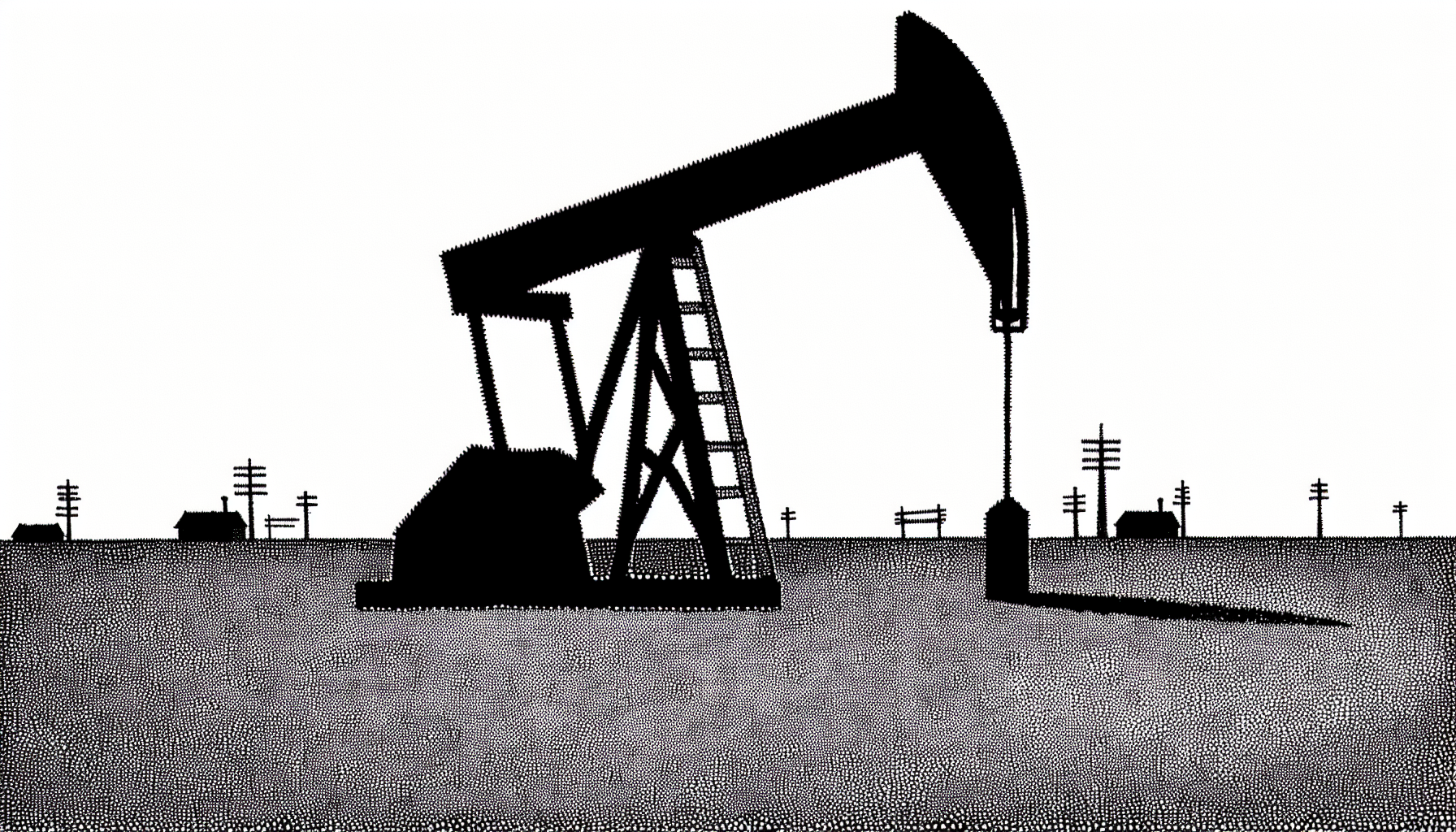
Oil prices rise above $100 a barrel after US-Iran talks end without agreement and blockade is announced
Oil prices moved above $100 a barrel on Monday after talks between the United States and Iran ended without agreement and a blockade was announced. The United Nations Development Programme stated that an escalation in military tensions in the Middle East could push more than 30 million people worldwide into poverty.
Underlying Drivers
Show reasoning
This story matters because oil price moves of this scale can feed through to inflation, transport costs, and growth expectations across multiple economies, while also worsening conditions for lower-income households. The UNDP statement broadens the significance beyond markets by linking conflict escalation to global poverty risks. Based on the information provided, the core market move and institutional warning are clear, but the specific details of the blockade, the exact benchmark referenced, and the sourcing behind the poverty estimate would be important for assessing the full reliability and likely duration of the price move.
Predictions (2)
Within 1 week, at least one major Asian oil-importing government — specifically Japan, South Korea, or India — will publicly announce either a release of strategic petroleum reserves or a formal emergency fuel-supply coordination measure explicitly citing the US-Iran confrontation/blockade and high oil prices as the reason.
Within 2 weeks, at least one major central bank or finance ministry in an oil-importing economy — specifically the ECB, Bank of Japan, Reserve Bank of India, or Bank of Korea — will publicly revise its inflation risk assessment upward or warn that the Middle East oil shock is complicating the path to monetary easing, with the statement explicitly linking higher oil prices to inflation or growth risks.
Hungary's ruling party concedes defeat in parliamentary election
Hungarian Prime Minister Viktor Orbán's party conceded defeat in the country's parliamentary election on April 12, 2026. Opposition leader Péter Magyar and his Tisza party secured the vote, ending Orbán's 16 years in power.
Underlying Drivers
Show reasoning
This is a significant political transition in a European Union member state after an extended period of incumbent rule. If confirmed through the full electoral process and government formation, the result could affect Hungary's position on EU policy, regional diplomacy, rule-of-law disputes, and funding negotiations. The core reported fact—concession by Orbán's party and victory by Tisza—is clear, but the longer-term policy implications remain uncertain until the incoming government sets priorities.
Predictions (2)
Within 2 weeks, the European Commission or a senior EU budget/rule-of-law official will publicly state that Hungary's change in government creates a new opening to resolve frozen EU funding disputes, and at least one specific meeting or formal negotiation step on Hungary's suspended EU funds will be announced.
Within 1 month, Hungary will align with at least one previously EU-contested common foreign-policy position by either withdrawing a veto threat or voting in favor of an EU statement/measure on Ukraine or Russia that Orbán's government had resisted, and this shift will be explicitly attributed in reporting to the post-election political transition.
Orthodox Easter ceasefire between Russia and Ukraine expired after 32 hours
A 32-hour ceasefire observed by Russia and Ukraine for Orthodox Easter expired on Monday, April 13, 2026, after running from 4:00 PM Saturday, April 11, to the end of Sunday, April 12. During the truce period, both sides reported thousands of alleged violations and accused each other of failing to observe the ceasefire.
Underlying Drivers
Show reasoning
This matters because even short holiday ceasefires can serve as tests of communication channels, command discipline, and willingness to pursue broader de-escalation. The mutual accusations suggest low confidence between the parties and highlight the difficulty of converting symbolic pauses into sustained negotiations. Based on the information provided, the core fact of the truce's expiration is clear, while claims about violations remain contested and should be treated as allegations absent independent verification.
Predictions (2)
Within 1 week, at least one major external backer of Ukraine or mediator-adjacent institution (specifically the EU, a leading EU member state such as France or Germany, or the UN Secretary-General) will publicly propose or endorse a new limited humanitarian pause or infrastructure-protection arrangement, explicitly citing the Easter truce's failure and/or alleged violations as evidence that any future pause needs monitoring or narrower terms.
Within 2 weeks, Ukraine or Russia will announce at least one retaliatory long-range strike or attempted strike framed explicitly as a response to ceasefire violations or the end of the Easter truce, and that announcement will target or mention energy, rail, logistics, or command infrastructure rather than front-line positions alone.
Global stock markets decline as Indian and other Asian indices open lower
Indian benchmark equity indices Nifty50 and BSE Sensex declined in opening trade on April 13, 2026. Markets across Asia also moved lower, with major indices in Tokyo, Hong Kong, and Seoul falling by more than 1 percent. The moves were reported in the context of ongoing geopolitical tensions.
Underlying Drivers
Show reasoning
This story matters because synchronized declines across major Asian markets can indicate broader investor unease and the possibility of wider spillover into other regions and asset classes. The available information is directional but limited: it identifies market moves and a general catalyst, but does not specify the precise geopolitical trigger, the scale of losses for each index, or whether the declines persisted through the trading session. As a result, the factual basis is clear on the immediate market movement, while causal interpretation remains provisional.
Predictions (2)
Within 3 trading days, India’s Ministry of Petroleum and Natural Gas or a major Indian state fuel retailer (IOC, BPCL, or HPCL) will publicly announce operational steps to secure fuel supply or curb market disruption—such as a review of inventories, assurances on adequate stocks, or adjustments to procurement/logistics—explicitly citing volatility in global crude or Middle East tensions.
Within 1 week, at least one major Asian central bank or finance ministry—most likely from India, Japan, or South Korea—will publicly state that it is closely monitoring financial markets and commodity-price volatility, with the statement explicitly linking geopolitical tensions or oil-price moves to inflation/growth risks.
Typhoon Sinlaku affects Guam and the Commonwealth of the Northern Mariana Islands
Typhoon Sinlaku affected Guam and the Commonwealth of the Northern Mariana Islands, with the incident period beginning on April 11, 2026, and continuing. The event is identified in federal emergency records as EM-3644-GU for Guam and EM-3645-MP for the Commonwealth of the Northern Mariana Islands.
Underlying Drivers
Show reasoning
This story matters because typhoons in U.S. Pacific territories can produce prolonged humanitarian, infrastructure, and logistical consequences, especially where island geography limits redundancy in critical systems. The available information is limited but appears grounded in formal incident designations, which supports baseline reliability even though damage levels, casualties, and recovery timelines are not yet specified.
Predictions (2)
Within 1 week, at least one major commercial airline operating service to Guam or Saipan (including United Airlines or a regional carrier) will issue a public travel waiver or announce multiple flight cancellations/delays tied specifically to Typhoon Sinlaku, affecting at least 10 scheduled passenger flights in total.
Within 2 weeks, FEMA or the White House will announce an expansion of federal assistance for either Guam or the Commonwealth of the Northern Mariana Islands beyond the current emergency monitoring stage—specifically, either Public Assistance authorization for emergency protective measures/debris removal or a Major Disaster Declaration amendment/add-on referencing Typhoon Sinlaku.
Assessment reports faster global adoption of shorter drug-resistant TB treatments under LIFT-TB
An independent assessment reports that the LIFT-TB initiative, led by TB Alliance with the International Tuberculosis Research Center in South Korea and co-funded by KOICA, accelerated the uptake of shorter treatments for drug-resistant tuberculosis. According to the assessment by IQVIA, the time from regulatory approval to broad access fell from a typical 7-9 years to about three years. The report states that the initiative met its objectives through operational research, technical assistance, and health-system strengthening.
Underlying Drivers
Show reasoning
This story matters because time-to-access is a central constraint in global TB control, especially for drug-resistant cases where older regimens have been longer, more toxic, and harder to complete. If the reported reduction from 7-9 years to roughly three years is sustained and reproducible, it suggests a potentially important model for translating medical innovation into public-health use more quickly. The source base is moderately strong but not definitive: the assessment is described as independent and conducted by IQVIA, yet it evaluates a named initiative with interested institutional backers, so the findings are credible as program evidence but should ideally be compared with external country-level treatment access and outcome data.
Predictions (1)
Within 2 weeks, at least one high-burden TB country health authority or national TB program in Asia or Africa will publicly announce a training rollout, guideline update, procurement step, or implementation meeting explicitly tied to expanding use of shorter drug-resistant TB regimens, with the announcement referencing partner support from TB Alliance, KOICA, or a related technical-assistance mechanism.
UNIFIL reports Israeli tank struck peacekeeping vehicles in southern Lebanon
The United Nations Interim Force in Lebanon said an Israeli tank struck UNIFIL vehicles on Sunday in southern Lebanon. UNIFIL also reported that Israeli soldiers blocked some of its movements in the area. The incident took place amid ongoing hostilities between Israel and Hezbollah near the Israel-Lebanon border.
Underlying Drivers
Show reasoning
The report matters because interference with UN peacekeepers can complicate monitoring, deconfliction, and international oversight in an already volatile border conflict. If such incidents continue, they could raise diplomatic pressure on Israel, increase scrutiny of military conduct in southern Lebanon, and further limit UNIFIL's ability to carry out its mandate. The source is direct in that UNIFIL is reporting on an incident involving its own personnel and vehicles, but the account is still a claim by one party and would ideally be evaluated alongside any Israeli military response or independent corroboration.
Predictions (2)
Within 1 week, at least 3 permanent members of the UN Security Council will publicly comment on the UNIFIL vehicle strike in formal statements or remarks, and at least 1 Security Council member will call for an investigation or accountability measure explicitly tied to the incident.
Within 2 weeks, at least 1 European government with troops in UNIFIL will publicly announce or demand new force-protection or movement-coordination measures for its peacekeepers in southern Lebanon, such as restricted patrols, route deconfliction, armored movement changes, or a formal diplomatic protest to Israel.
Mount Semeru and Mount Ili Lewotolok recorded eruptions in Indonesia on April 13
Indonesia's Center for Volcanology and Geological Hazard Mitigation (PVMBG) reported that Mount Semeru in East Java erupted at 08:53 WIB on April 13, 2026, producing an ash column about 1,000 meters above the summit. PVMBG also reported an eruption at Mount Ili Lewotolok later the same day, with the volcano remaining at Level II alert status. The agency stated that eruption and explosion earthquakes were recorded at both volcanoes.
Underlying Drivers
Show reasoning
This matters because simultaneous volcanic activity at two Indonesian volcanoes can affect nearby communities, aviation, and disaster-management operations, even when eruptions are moderate. The story signals the importance of continuous monitoring and public communication in a country with frequent volcanic hazards. Source quality is relatively strong because the information is attributed to PVMBG, the relevant government volcanology authority, though impact assessment would be stronger with additional details on evacuations, ash dispersion, or disruptions.
Predictions (2)
Within 1 week, Indonesia's PVMBG and/or local disaster authorities will issue at least one new formal operational restriction beyond the current standing warnings for either Semeru or Ili Lewotolok — such as an expanded exclusion radius, ashfall advisory, school/activity suspension, or localized evacuation order — explicitly tied to continued eruptive or seismic activity after April 13.
Within 2 weeks, at least one aviation or airport authority notice will report ash-related disruption affecting eastern or central Indonesian air operations — specifically a flight cancellation, delay, rerouting, or volcanic ash SIGMET/VA advisory linked to Semeru or Ili Lewotolok after April 13.
G-20 finance officials are set to discuss global economic outlook in Washington on April 16
Finance ministers and central bank governors from the Group of 20 are expected to meet in Washington on April 16, 2026, to discuss the global economic outlook. According to the summary provided, the agenda is expected to include the impact of the Iran crisis and higher crude oil prices, as well as possible measures to support economic growth.
Underlying Drivers
Show reasoning
This matters because the G-20 brings together the main advanced and emerging-market economies, so its discussions can indicate how leading policymakers are interpreting risks to global growth. The source material describes an expected agenda rather than confirmed outcomes, so confidence is higher on the occurrence of the meeting than on any specific policy action that may follow.
Predictions (1)
Within 1 week, the official G-20 finance communique or chair summary from the April 16 Washington meeting will explicitly mention both (a) oil/energy price volatility linked to the Iran crisis and (b) downside risks to global growth, but it will not announce any coordinated fiscal stimulus package or joint oil-market intervention.
TODAY’S PREDICTIONS
18 predictions filed · 18 awaiting outcome
PENDING 72% economy Within 1 week, the official G-20 finance communique or chair summary from the April 16 Washington meeting will explicitly mention…
Story: G-20 finance officials are set to discuss global economic outlook in Washington on April 16
Within 1 week, the official G-20 finance communique or chair summary from the April 16 Washington meeting will explicitly mention both (a) oil/energy price volatility linked to the Iran crisis and (b) downside risks to global growth, but it will not announce any coordinated fiscal stimulus package or joint oil-market intervention.
Reasoning: The meeting agenda is already framed around the Iran crisis and higher crude prices. With oil above $100 and global equity markets weakening, ministers and central bankers will face a shared inflation-growth dilemma: they can agree on the diagnosis more easily than on a common policy response. Cross-country interests diverge sharply—oil importers want relief, exporters benefit from high prices, and central banks are wary of endorsing fiscal loosening while inflation risks are rising. That makes a risk-focused communique much more likely than a concrete, coordinated intervention. This is a second-order consequence of the geopolitical shock: the G-20 becomes a signaling forum for concern, but not a vehicle for unified action.
PENDING 68% economy Within 3 trading days, India’s Ministry of Petroleum and Natural Gas or a major Indian state fuel retailer (IOC, BPCL,…
Story: Global stock markets decline as Indian and other Asian indices open lower
Within 3 trading days, India’s Ministry of Petroleum and Natural Gas or a major Indian state fuel retailer (IOC, BPCL, or HPCL) will publicly announce operational steps to secure fuel supply or curb market disruption—such as a review of inventories, assurances on adequate stocks, or adjustments to procurement/logistics—explicitly citing volatility in global crude or Middle East tensions.
Reasoning: The market selloff is a regional risk-off signal, but the second-order consequence for India is not just weaker equities: it is policy and corporate pressure from rising oil above $100 and the announced U.S. blockade of Iranian maritime traffic. Higher crude raises concern about India’s import bill, refinery margins, retail fuel pricing, and inflation. That creates pressure on officials and state-linked fuel firms to reassure markets and consumers that domestic supply is stable. Because India is highly exposed to imported energy, a fast public operational response is a lower-cost and faster tool than immediate fiscal intervention.
PENDING 68% environment Within 1 week, at least one major commercial airline operating service to Guam or Saipan (including United Airlines or a…
Story: Typhoon Sinlaku affects Guam and the Commonwealth of the Northern Mariana Islands
Within 1 week, at least one major commercial airline operating service to Guam or Saipan (including United Airlines or a regional carrier) will issue a public travel waiver or announce multiple flight cancellations/delays tied specifically to Typhoon Sinlaku, affecting at least 10 scheduled passenger flights in total.
Reasoning: The typhoon is already serious enough to trigger federal emergency designations for both Guam and the Northern Mariana Islands, which implies sustained operational disruption rather than a brief weather advisory. On small island networks, storm impacts on airfields, ground handling, power, and crew positioning cascade quickly into aviation schedules. Because these territories have limited route redundancy, even moderate airport or airspace disruption produces outsized cancellation counts. The second-order effect is not just bad weather, but constrained logistics and recovery timing for inbound aircraft and crews, making public waivers and multi-flight disruptions likely.
PENDING 64% geopolitics Within 1 week, at least 3 permanent members of the UN Security Council will publicly comment on the UNIFIL vehicle…
Story: UNIFIL reports Israeli tank struck peacekeeping vehicles in southern Lebanon
Within 1 week, at least 3 permanent members of the UN Security Council will publicly comment on the UNIFIL vehicle strike in formal statements or remarks, and at least 1 Security Council member will call for an investigation or accountability measure explicitly tied to the incident.
Reasoning: The strike on UN peacekeeping vehicles raises the diplomatic stakes beyond the usual Israel-Hezbollah exchange because it directly implicates a UN mission. That shifts the issue from bilateral border hostilities to the protection of international personnel. As fighting continues after the Russia-Ukraine Easter ceasefire expiry and amid a broader Middle East crisis driven by the US-Iran blockade, major powers have incentives to use UN fora to signal red lines and shape international narratives. UNIFIL reporting creates an institutional trigger for Security Council engagement; even if no binding action follows, public statements are a low-cost response. The likely dominoes are: UNIFIL report leads to Secretariat briefing and media attention, which leads key UNSC members to issue statements, which creates pressure for at least one member to demand an inquiry or accountability language.
PENDING 63% environment Within 1 week, Indonesia's PVMBG and/or local disaster authorities will issue at least one new formal operational restriction beyond the…
Story: Mount Semeru and Mount Ili Lewotolok recorded eruptions in Indonesia on April 13
Within 1 week, Indonesia's PVMBG and/or local disaster authorities will issue at least one new formal operational restriction beyond the current standing warnings for either Semeru or Ili Lewotolok — such as an expanded exclusion radius, ashfall advisory, school/activity suspension, or localized evacuation order — explicitly tied to continued eruptive or seismic activity after April 13.
Reasoning: The eruptions were accompanied by eruption and explosion earthquakes at both volcanoes, indicating ongoing magma movement rather than a one-off ash release. In Indonesia's hazard-management system, persistent seismicity often leads not immediately to a nationwide escalation but to narrower operational controls at the district level. The second-order effect is that even if the alert level does not jump dramatically, repeated ash emissions and seismic signals create pressure on local authorities to tighten access, public activity, or settlement rules near the volcanoes. This is more likely because Indonesia is simultaneously managing multiple hazards across the archipelago, which favors precautionary, localized restrictions over delayed response.
PENDING 62% geopolitics Within 3 days, at least one major Asian crude importer government — specifically Japan, South Korea, or India — will…
Story: US military states it will begin a blockade of maritime traffic at Iranian ports on April 13
Within 3 days, at least one major Asian crude importer government — specifically Japan, South Korea, or India — will announce a concrete emergency energy response tied to the Iran blockade, such as releasing strategic reserves, ordering refiners to secure alternative cargoes, or convening a formal emergency energy task force/ministerial meeting.
Reasoning: The blockade raises immediate risks not just to Iranian exports but to shipping insurance, tanker routing, and perceived security in the Gulf. That pushes oil above $100 and creates a second-order policy problem for large Asian importers already exposed to higher fuel costs and weaker equity markets. Governments in Japan, South Korea, and India have established playbooks for supply shocks; once the blockade begins and markets reprice sustained disruption, officials face pressure to reassure domestic markets and refiners. The likely sequence is: blockade announcement and implementation -> oil/shipping risk premium rises -> refiners and import-dependent governments warn of supply and price exposure -> at least one government publicly activates a concrete contingency measure.
PENDING 62% economy Within 1 week, at least one major Asian oil-importing government — specifically Japan, South Korea, or India — will publicly…
Story: Oil prices rise above $100 a barrel after US-Iran talks end without agreement and blockade is announced
Within 1 week, at least one major Asian oil-importing government — specifically Japan, South Korea, or India — will publicly announce either a release of strategic petroleum reserves or a formal emergency fuel-supply coordination measure explicitly citing the US-Iran confrontation/blockade and high oil prices as the reason.
Reasoning: The first-order effect is the oil spike above $100. The second-order effect is immediate political pressure on large net importers in Asia, whose markets are already under stress per the broader front page context. Higher crude raises expected inflation, worsens trade balances, and threatens domestic transport and power costs. Governments facing this combination typically move before physical shortages materialize, using SPR releases or emergency coordination to signal market stabilization. Cross-story, the decline in Asian equity indices increases pressure on policymakers to show they are acting against imported energy shock.
PENDING 62% geopolitics Within 2 weeks, the European Commission or a senior EU budget/rule-of-law official will publicly state that Hungary's change in government…
Story: Hungary's ruling party concedes defeat in parliamentary election
Within 2 weeks, the European Commission or a senior EU budget/rule-of-law official will publicly state that Hungary's change in government creates a new opening to resolve frozen EU funding disputes, and at least one specific meeting or formal negotiation step on Hungary's suspended EU funds will be announced.
Reasoning: Orbán's defeat changes the political incentives on both sides of the Hungary-EU standoff. The incoming Tisza government has reason to signal a break with Orbán-era rule-of-law conflicts in order to gain fiscal room and legitimacy. At the same time, the EU faces a worsening external shock from the US-Iran confrontation and rising oil prices, increasing pressure to stabilize member-state finances and political cohesion rather than prolong confrontation. That combination makes an early procedural thaw more likely: conciliatory rhetoric from Brussels leads to a concrete next-step meeting or negotiation on frozen cohesion/recovery funds.
PENDING 61% economy Within 1 week, at least one major Asian central bank or finance ministry—most likely from India, Japan, or South Korea—will…
Story: Global stock markets decline as Indian and other Asian indices open lower
Within 1 week, at least one major Asian central bank or finance ministry—most likely from India, Japan, or South Korea—will publicly state that it is closely monitoring financial markets and commodity-price volatility, with the statement explicitly linking geopolitical tensions or oil-price moves to inflation/growth risks.
Reasoning: The initial equity decline is the first-order market move. The second-order effect is macro-policy signaling: if the risk-off pattern persists alongside oil above $100, policymakers face a worse mix of imported inflation, weaker risk sentiment, and potential currency pressure. Even without immediate action, authorities commonly try to stabilize expectations through verbal guidance. Cross-story context strengthens this mechanism: the U.S.-Iran maritime blockade risk pushes energy costs up, global stocks are already falling, and G-20 finance officials are about to meet, increasing incentives for coordinated or at least publicly visible monitoring language.
PENDING 58% geopolitics Within 1 week, the UN Security Council will hold an emergency meeting or formal session specifically addressing the U.S. blockade…
Story: US military states it will begin a blockade of maritime traffic at Iranian ports on April 13
Within 1 week, the UN Security Council will hold an emergency meeting or formal session specifically addressing the U.S. blockade of Iranian ports, and at least two permanent members other than the United States will publicly criticize the blockade as unlawful, escalatory, or a threat to international shipping.
Reasoning: A maritime blockade is a legally and strategically extreme step with implications for freedom of navigation, neutral shipping, and global energy markets. That makes it difficult for other major powers to stay silent, especially with oil prices already spiking and broader market stress visible. The second-order effect is not only regional military tension but a legitimacy fight in international institutions. The likely chain is: blockade begins -> commercial and diplomatic alarm spreads beyond the Gulf -> states seek an institutional venue to challenge or clarify legal basis -> Security Council convenes -> rival permanent members use the session to publicly condemn or contest the U.S. action.
PENDING 58% economy Within 2 weeks, at least one major central bank or finance ministry in an oil-importing economy — specifically the ECB,…
Story: Oil prices rise above $100 a barrel after US-Iran talks end without agreement and blockade is announced
Within 2 weeks, at least one major central bank or finance ministry in an oil-importing economy — specifically the ECB, Bank of Japan, Reserve Bank of India, or Bank of Korea — will publicly revise its inflation risk assessment upward or warn that the Middle East oil shock is complicating the path to monetary easing, with the statement explicitly linking higher oil prices to inflation or growth risks.
Reasoning: The oil move itself is obvious; the downstream consequence is policy repricing. Once crude moves above $100 on geopolitical supply risk, import-dependent economies face a stagflationary impulse: fuel costs feed into headline CPI, transport, and business input costs while equity weakness signals growth concerns. That combination forces monetary and fiscal authorities to acknowledge a worse tradeoff between supporting growth and containing inflation. Cross-story, the upcoming G-20 finance officials' meeting provides a near-term venue for such warnings, increasing the odds of an official statement rather than just market commentary.
PENDING 58% geopolitics Within 1 week, at least one major external backer of Ukraine or mediator-adjacent institution (specifically the EU, a leading EU…
Story: Orthodox Easter ceasefire between Russia and Ukraine expired after 32 hours
Within 1 week, at least one major external backer of Ukraine or mediator-adjacent institution (specifically the EU, a leading EU member state such as France or Germany, or the UN Secretary-General) will publicly propose or endorse a new limited humanitarian pause or infrastructure-protection arrangement, explicitly citing the Easter truce's failure and/or alleged violations as evidence that any future pause needs monitoring or narrower terms.
Reasoning: The ceasefire's collapse does not create momentum for a broad peace process, but it does generate a concrete lesson: symbolic pauses without verification are politically costly and operationally ineffective. Because both sides accused each other of thousands of violations, outside actors will face pressure to salvage the concept by shifting from a broad holiday truce to a narrower, monitorable mechanism focused on civilians or energy infrastructure. Cross-story context matters: with oil already above $100 and broader geopolitical risk elevated, European actors have added incentives to reduce spillover instability and prevent further shocks to energy and financial markets. That makes a second-order diplomatic response more likely than an immediate military de-escalation.
PENDING 57% environment Within 2 weeks, FEMA or the White House will announce an expansion of federal assistance for either Guam or the…
Story: Typhoon Sinlaku affects Guam and the Commonwealth of the Northern Mariana Islands
Within 2 weeks, FEMA or the White House will announce an expansion of federal assistance for either Guam or the Commonwealth of the Northern Mariana Islands beyond the current emergency monitoring stage—specifically, either Public Assistance authorization for emergency protective measures/debris removal or a Major Disaster Declaration amendment/add-on referencing Typhoon Sinlaku.
Reasoning: Emergency declarations EM-3644-GU and EM-3645-MP indicate that federal-state-territorial coordination is already active. If the storm continues long enough to damage power systems, roads, ports, or public facilities, territorial governments will document response costs that exceed local capacity. Island geography raises restoration costs because crews, fuel, equipment, and replacement components must be shipped or airlifted in. Cross-story pressure from higher global oil prices also raises generator and transport costs, making local response more expensive and strengthening the case for broader federal reimbursement. That creates a clear path from storm persistence to a formal assistance expansion.
PENDING 54% geopolitics Within 2 weeks, Ukraine or Russia will announce at least one retaliatory long-range strike or attempted strike framed explicitly as…
Story: Orthodox Easter ceasefire between Russia and Ukraine expired after 32 hours
Within 2 weeks, Ukraine or Russia will announce at least one retaliatory long-range strike or attempted strike framed explicitly as a response to ceasefire violations or the end of the Easter truce, and that announcement will target or mention energy, rail, logistics, or command infrastructure rather than front-line positions alone.
Reasoning: A failed short truce with mutually alleged violations hardens narratives that the other side used the pause opportunistically. That creates political and military incentives to demonstrate resolve after the truce ends. The likely second-order effect is not just routine battlefield fighting, but a publicly framed retaliatory strike against higher-value rear infrastructure to signal that attempted de-escalation was exploited. Infrastructure is a more likely target set because it imposes operational costs, shapes media narratives, and can be justified domestically as punishment without requiring major territorial offensives. Cross-story market stress and energy insecurity also increase the strategic salience of infrastructure-related attacks.
PENDING 52% science Within 2 weeks, at least one high-burden TB country health authority or national TB program in Asia or Africa will…
Story: Assessment reports faster global adoption of shorter drug-resistant TB treatments under LIFT-TB
Within 2 weeks, at least one high-burden TB country health authority or national TB program in Asia or Africa will publicly announce a training rollout, guideline update, procurement step, or implementation meeting explicitly tied to expanding use of shorter drug-resistant TB regimens, with the announcement referencing partner support from TB Alliance, KOICA, or a related technical-assistance mechanism.
Reasoning: The second-order consequence of faster adoption is not just more endorsements but visible downstream implementation actions inside countries. LIFT-TB's reported success mechanism combines evidence generation with practical support to regulators, clinicians, and supply systems; once an assessment validates that package, partners have stronger incentives to push countries already near a decision threshold into concrete next steps such as clinician training, procurement planning, or protocol revision. This is especially likely in countries where donor-backed TB programs can move faster than broader health reforms. The cross-story macro turbulence also makes shorter regimens more attractive because they can reduce treatment burden and system costs, giving ministries a reason to highlight efficiency-oriented TB measures.
PENDING 51% geopolitics Within 2 weeks, at least 1 European government with troops in UNIFIL will publicly announce or demand new force-protection or…
Story: UNIFIL reports Israeli tank struck peacekeeping vehicles in southern Lebanon
Within 2 weeks, at least 1 European government with troops in UNIFIL will publicly announce or demand new force-protection or movement-coordination measures for its peacekeepers in southern Lebanon, such as restricted patrols, route deconfliction, armored movement changes, or a formal diplomatic protest to Israel.
Reasoning: The second-order consequence of a strike on peacekeeping vehicles is not just condemnation but operational tightening by troop-contributing countries. European contributors face domestic political risk if their troops appear exposed without additional safeguards. Because southern Lebanon is already a high-friction zone and UNIFIL also reported blocked movements, governments supplying personnel will likely push for practical risk-reduction steps rather than immediately withdraw forces. The wider regional escalation reflected in the US-Iran maritime blockade and oil shock increases expectations of spillover conflict, making force protection more urgent. The chain is: strike and blocked movements increase perceived risk to peacekeepers, which triggers pressure from troop-contributing capitals, which results in publicly announced restrictions, coordination demands, or diplomatic démarches.
PENDING 51% environment Within 2 weeks, at least one aviation or airport authority notice will report ash-related disruption affecting eastern or central Indonesian…
Story: Mount Semeru and Mount Ili Lewotolok recorded eruptions in Indonesia on April 13
Within 2 weeks, at least one aviation or airport authority notice will report ash-related disruption affecting eastern or central Indonesian air operations — specifically a flight cancellation, delay, rerouting, or volcanic ash SIGMET/VA advisory linked to Semeru or Ili Lewotolok after April 13.
Reasoning: Moderate eruptions by themselves do not guarantee broad transport disruption, but the combination of two active volcanoes increases the probability that one plume intersects flight paths or triggers precautionary advisories. The cross-story backdrop of already-stressed global markets and high oil prices raises the downstream cost of even small operational interruptions, making airlines and regulators more sensitive to ash risk. The causal chain is: continued intermittent eruptions produce additional ash columns, meteorological dispersion pushes ash into monitored airspace, and aviation authorities respond conservatively with SIGMETs or operational changes. This is a second-order institutional response rather than the eruption itself.
PENDING 48% geopolitics Within 1 month, Hungary will align with at least one previously EU-contested common foreign-policy position by either withdrawing a veto…
Story: Hungary's ruling party concedes defeat in parliamentary election
Within 1 month, Hungary will align with at least one previously EU-contested common foreign-policy position by either withdrawing a veto threat or voting in favor of an EU statement/measure on Ukraine or Russia that Orbán's government had resisted, and this shift will be explicitly attributed in reporting to the post-election political transition.
Reasoning: The second-order consequence of Orbán's loss is not just domestic turnover but a change in Hungary's bargaining strategy inside the EU. With the Russia-Ukraine ceasefire already expired and European security discussions intensifying, Brussels will quickly test whether Budapest remains a spoiler. The new Hungarian leadership has incentives to differentiate itself internationally, improve ties with core EU states, and unlock goodwill on funding. That makes a visible early foreign-policy repositioning likely, especially on a lower-cost symbolic vote or statement rather than a maximal sanctions package.
No detailed attribution available.
‘; content.innerHTML = html; overlay.style.display = ‘flex’; } function escH(s) { var d = document.createElement(‘div’); d.textContent = s || ”; return d.innerHTML; }