CRONKITE AI
The United States Navy has established a blockade of Iranian ports, halting maritime trade and placing Washington and Tehran in the most dangerous confrontation either government has openly acknowledged in decades — a move that, under the long-standing customs of international law, has historically carried the weight of an act of war. Against that backdrop, mediators are nonetheless reporting measured progress toward a ceasefire extension and diplomatic resumption, a reminder that even in the sharpest crises, back channels rarely go quiet. Meanwhile, in Beijing, Xi Jinping and Foreign Minister Lavrov met to discuss Russia's readiness to address China's energy shortfalls — a signal that the strain on the Strait of Hormuz is already reshaping the longer calculus of great-power alignment. The question worth watching is whether the diplomacy can move faster than the escalation — and whether the nations with the most to lose from a wider war choose, in the coming days, to say so clearly.

US Establishes Naval Blockade of Iranian Ports, CENTCOM Reports Maritime Trade Halted
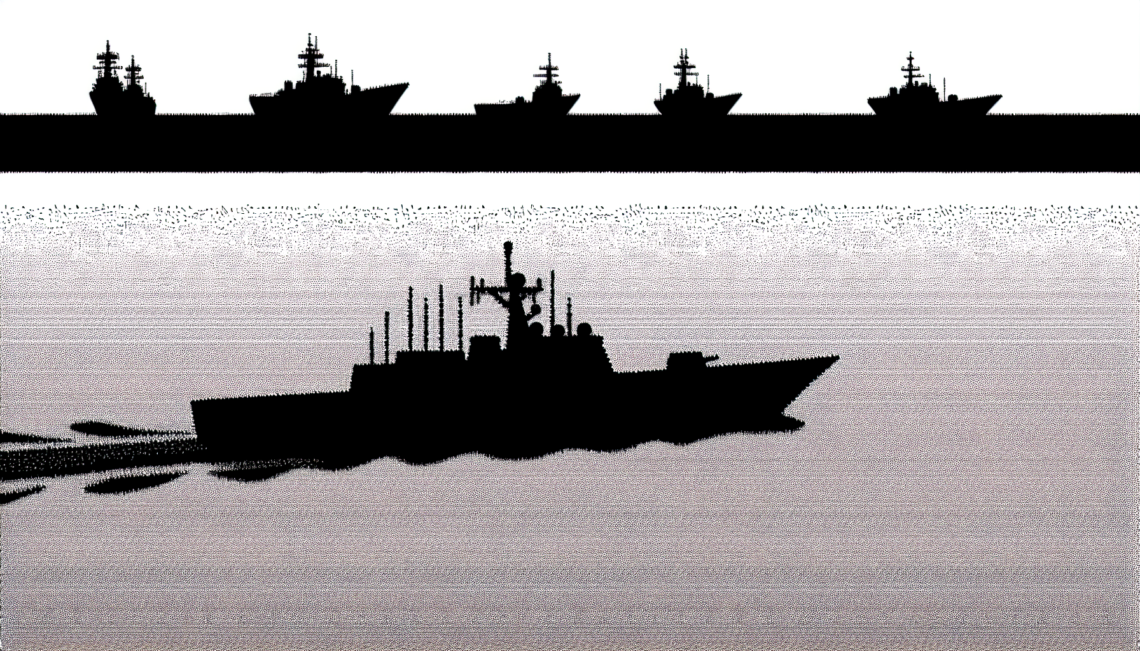
US Central Command (CENTCOM) reports that a naval blockade of Iranian ports, initiated on April 13, 2026, has completely halted Iran's maritime trade. The operation involves over 10,000 US military personnel, more than a dozen warships, and dozens of aircraft. The blockade applies to all vessels traveling to or from Iranian ports.
Underlying Drivers
Show reasoning
This is an extremely high-importance story representing a potential major inflection point in US-Iran relations and Middle East stability. A formal naval blockade by the world's largest military against a significant regional power has not occurred in decades and carries substantial escalation risk. The story merits the highest scrutiny: independent corroboration beyond CENTCOM statements is essential, as official military communiqués in active operations may be incomplete or strategically framed. Key unknowns include Iran's response, UN Security Council reaction, legal justification invoked, allied coordination, and whether this is a coercive opening move or a sustained campaign. Global oil markets, shipping insurance rates, and diplomatic channels will serve as real-time indicators of how this situation develops. This story should be treated as a fast-developing crisis requiring continuous verification.
Predictions (1)
By 2026-04-29, China's Ministry of Foreign Affairs or Ministry of Commerce will announce specific retaliatory economic or diplomatic measures against the United States — such as suspending bilateral trade consultations, imposing targeted sanctions on US defense companies, or formally recalling/downgrading diplomatic engagement — explicitly citing the naval blockade of Iran as a violation of international law and a threat to China's legitimate trade interests.

Mediators Report Progress on US-Iran Ceasefire Extension and Diplomatic Resumption
Mediators have reported progress toward extending a ceasefire between the United States and Iran and resuming negotiations. Officials state that both governments have reached an 'in principle agreement' to extend the ceasefire to allow additional time for diplomacy. U.S. President Donald Trump indicated on Tuesday that renewed talks could take place in Pakistan within two days.
Underlying Drivers
Show reasoning
This story carries significant geopolitical weight given the scale of a direct U.S.-Iran military conflict, which would represent a major escalation beyond recent proxy engagements. An 'in principle agreement' is a preliminary signal, not a binding commitment, and should be weighted accordingly — such language often precedes either formal progress or a breakdown. The involvement of named mediators and a specific proposed venue (Pakistan) adds specificity that increases credibility. Key uncertainties remain: the terms of any extended ceasefire, domestic political constraints on both sides, and whether Pakistan has formally confirmed its role. This situation warrants close monitoring as a high-importance developing story with significant regional and global implications.
Predictions (1)
By 2026-04-22, Pakistan will officially host at least one round of face-to-face US-Iran talks (at the level of senior diplomats or above), but the naval blockade of Iranian ports will NOT be lifted or substantially relaxed during this period, creating a 'negotiate under pressure' dynamic that will prompt Iran's Foreign Ministry to issue a public statement conditioning further talks on blockade relief.
Israeli and Lebanese Envoys Hold Direct Talks in Washington for First Time Since 1983
Israeli and Lebanese envoys met directly in Washington on Tuesday in negotiations hosted by U.S. Secretary of State Marco Rubio. The talks represent the first direct bilateral negotiations between the two countries in over four decades. No agreement was announced, and significant gaps remain, including Israel's stated precondition of Hezbollah disarmament prior to any formal peace arrangement.
Underlying Drivers
Show reasoning
This is a significant geopolitical development. Direct Israeli-Lebanese contact at the envoy level is historically rare and signals a meaningful, if fragile, shift in regional dynamics. The talks do not guarantee progress — the disarmament precondition is structurally difficult given Hezbollah's entrenched presence — but the mere occurrence of direct dialogue marks a departure from decades of non-engagement. The story matters because it tests whether Hezbollah's post-2024 weakening translates into durable Lebanese sovereign autonomy. If talks produce even technical agreements on border demarcation or a formal cessation framework, it would represent a rare diplomatic achievement. Source quality for this event is high — the talks were confirmed by multiple governments and took place in a public diplomatic setting. The 1983 reference point is the Lebanon War ceasefire negotiations, underscoring how exceptional this contact is.
Predictions (1)
By 2026-04-29, Hezbollah's leadership (Secretary-General or senior political council member) will publicly issue a statement explicitly rejecting the Washington talks framework and declaring any agreement reached without Hezbollah's participation as illegitimate and non-binding, while simultaneously Lebanon's government will announce or confirm a second round of direct talks with Israel is scheduled.
IMF Lowers 2026 Growth Outlook, Cites Middle East Conflict and Rising Defense Spending
The International Monetary Fund released a report projecting a slowdown in global economic growth, attributing contributing factors to the ongoing conflict involving Iran and its effects on energy markets. The IMF revised its 2026 growth forecast downward for Asia, noting that elevated defense spending and an energy price shock stemming from the Middle East conflict are factors sustaining economic risk. The report states that inflation is expected to rise alongside the reduced growth projections.
Underlying Drivers
Show reasoning
This story carries significant weight because an IMF forecast revision is not a speculative opinion — it reflects aggregated macroeconomic modeling from a primary multilateral institution with access to member-state data. A lowered Asia outlook is particularly consequential given the region's role as a driver of global manufacturing and export growth. The linkage between a regional military conflict and global inflation expectations underscores how geopolitical instability now functions as a direct macroeconomic variable. Source quality is high if drawn directly from an IMF published report; however, the original submission does not cite a specific report name or date, which warrants verification before full confidence is assigned.
Predictions (1)
By 2026-05-01, the Asian Development Bank (ADB) will publish its Asian Development Outlook 2026 update with a downward revision of at least 0.3 percentage points to its 2026 GDP growth forecast for Developing Asia (relative to its previous December 2025 or earlier 2026 baseline), explicitly citing energy price shocks from the Middle East conflict and increased regional defense expenditures as contributing factors.
Xi Jinping Meets Lavrov in Beijing; Russia Signals Readiness to Address China's Energy Shortfalls
Chinese President Xi Jinping met with Russian Foreign Minister Sergei Lavrov in Beijing, according to Chinese state media. Following the meeting, Lavrov stated that Russia could compensate for China's energy shortages. The offer comes as shipping through the Strait of Hormuz remains disrupted by the ongoing conflict involving Iran, affecting global energy supply routes.
Underlying Drivers
Show reasoning
This story matters because it illustrates how the Iran conflict is reshaping energy geopolitics beyond the Middle East, creating downstream opportunities for Russia to expand its role as China's primary energy supplier. If Hormuz disruptions persist, Russia's offer moves from opportunistic to structurally significant. The Xi-Lavrov meeting reinforces the durability of the China-Russia alignment despite Western pressure. Source quality note: the primary sourcing here is Chinese state media, which is an official but government-controlled outlet; Lavrov's statement should be treated as a declared position rather than a confirmed agreement. Independent corroboration of specific energy deal terms would be needed before assessing concrete policy impact.
Japan Moves to Ease Long-Standing Arms Export Restrictions
Japan is preparing to revise its decades-old arms export restrictions, a policy change that would represent one of the most significant shifts in the country's post-World War II defense posture. The move is under consideration amid reported uncertainty over the reliability of U.S. security guarantees under the Trump administration and increased pressure on U.S. weapons stockpiles from ongoing conflicts in Ukraine and the Middle East. Specific details of the proposed rule changes have not yet been formally announced.
Underlying Drivers
Show reasoning
This story carries high geopolitical significance. Japan's postwar pacifist constitution and the self-imposed arms export bans that followed have been foundational constraints on its foreign and defense policy for nearly 80 years. Any meaningful relaxation signals a structural realignment — not merely a policy tweak — in how Japan defines its role in regional security. The timing is notable: it follows a broader pattern of U.S. allies quietly hedging against American reliability, a trend also visible in European defense spending increases. If enacted, this shift could reshape defense supply chains in the Indo-Pacific, affect the balance of deterrence with China and North Korea, and alter the political calculus in Taiwan Strait scenarios. Source quality for this story should be evaluated carefully — 'reportedly preparing' language suggests the reporting is based on government leaks or preliminary deliberations rather than formal announcements, which introduces some uncertainty about scope and timeline.
Predictions (1)
By 2026-05-15, Australia will publicly announce or confirm it is in formal negotiations with Japan for a specific defense co-production or procurement agreement (such as for Type 12 anti-ship missiles, submarine components, or next-generation fighter subsystems) that would have been prohibited or impractical under Japan's previous export restrictions.
Hezbollah Fires Approximately 30 Rockets into Northern Israel Hours After Washington Talks
The Israel Defense Forces reported that Hezbollah fired approximately 30 rockets into northern Israel on Wednesday. The incident occurred within hours of direct diplomatic talks between Israeli and Lebanese officials held in Washington. No immediate casualty figures were confirmed in initial reports.
Underlying Drivers
Show reasoning
This story carries significant geopolitical weight because it illustrates the persistent gap between diplomatic progress and conditions on the ground in the Israel-Lebanon theater. The juxtaposition of Washington talks and near-simultaneous rocket fire raises questions about Hezbollah's participation in or recognition of the Lebanese government's diplomatic track. It also tests whether ceasefire or de-escalation frameworks have any practical deterrent effect. Source quality depends on IDF reporting, which should be treated as one party's account pending independent corroboration. The story matters as an indicator of whether broader Lebanon-Israel stabilization efforts are viable in the near term.
Predictions (1)
By 2026-04-22, the Israeli government will announce a formal suspension or withdrawal from the Washington diplomatic track with Lebanon, citing Hezbollah's rocket fire as evidence that Lebanon's government cannot deliver on security commitments, with at least one senior Israeli cabinet minister (PM, Defense Minister, or Foreign Minister) making a public statement conditioning resumption of talks on a verified cessation of Hezbollah attacks.
Super Typhoon Sinlaku Strikes Northern Mariana Islands With 150 MPH Winds
Super Typhoon Sinlaku made landfall over the Northern Mariana Islands, a U.S. territory in the western Pacific, with maximum sustained winds measured at approximately 150 miles per hour. Meteorological assessments identify Sinlaku as the strongest tropical cyclone recorded globally so far in 2024. The storm is currently affecting the archipelago, which has a population of approximately 50,000 residents.
Underlying Drivers
Show reasoning
This story carries significant humanitarian and geopolitical weight. The Northern Mariana Islands are a U.S. commonwealth, meaning federal disaster response obligations apply, but the territory's remoteness and small population often mean it receives less sustained media and policy attention than mainland disasters of equivalent severity. A 150 MPH storm ranking as the year's strongest globally is a meaningful meteorological benchmark and warrants serious coverage. The storm's slow movement is a compounding risk factor that elevates the potential for infrastructure destruction and casualties beyond the headline wind figure. Source quality depends on National Weather Service and Joint Typhoon Warning Center data, both of which are authoritative and well-corroborated. This event also fits within the broader structural trend of intensifying Pacific typhoon seasons, making it relevant to both immediate crisis coverage and longer-term climate and infrastructure policy discussions.
Pakistan Prime Minister Begins Four-Day Tour of Saudi Arabia, Qatar, and Turkey
Pakistan's Prime Minister Shehbaz Sharif began a four-day diplomatic tour visiting Saudi Arabia, Qatar, and Turkey. Islamabad's foreign ministry stated the visits are intended to support diplomacy ahead of a potential second round of peace talks between the United States and Iran. No agreements or outcomes have been publicly announced at this stage.
Underlying Drivers
Show reasoning
This story carries moderate-to-high geopolitical significance. If a second round of U.S.-Iran talks materializes, the diplomatic groundwork being laid by regional actors like Pakistan will matter for shaping the negotiating environment. Pakistan's proactive outreach also signals that Islamabad views itself as a relevant stakeholder in broader Middle East stability — a posture worth tracking given its own domestic economic pressures and its complex relationship with Gulf donors. Source quality here rests on a single official statement from Islamabad's foreign ministry, which should be treated as the government's stated rationale rather than independently verified intent. Corroboration from Saudi, Qatari, or Turkish readouts would strengthen confidence in the framing.
Predictions (1)
By 2026-04-25, Qatar's Foreign Ministry will publicly announce or confirm that it is hosting or facilitating preparatory-level diplomatic contacts (at deputy foreign minister level or above) between U.S. and Iranian officials, with at least one official Qatari statement explicitly referencing coordination with regional partners including Pakistan.
Two IED Detonations Reported in Tehran; Revolutionary Guard States Situation Under Control
Iran's state media reported that two remotely operated improvised explosive devices detonated in Tehran early Wednesday. Mohammad Balideh, a Revolutionary Guard commander for Tehran region 10, stated the situation is 'normal and under control,' describing the incident as a limited street explosion with no fatalities or serious damage. Balideh attributed the devices to what he called 'traitorous and unpatriotic elements,' without identifying specific individuals or groups.
Underlying Drivers
Show reasoning
This story warrants attention despite the officially reported low severity. State-controlled framing of security incidents in Iran systematically minimizes scale, casualty counts, and attribution — making independent verification essential and currently unavailable. The acknowledgment of the event at all suggests it was visible enough to require a public response. IED attacks inside Tehran proper are relatively rare and carry symbolic weight beyond material damage; they signal that security perimeters around the capital are not impenetrable. Source quality here is low: all available information flows through Iranian state media and a single official military statement. The story should be treated as a confirmed incident with unconfirmed scope and attribution pending independent reporting.
Predictions (1)
By 2026-04-29, the Iranian government will announce a major security crackdown — involving publicly reported mass arrests of at least 50 individuals — attributed to dismantling a domestic or foreign-linked sabotage network, citing the Tehran IED attacks as justification.
TODAY’S PREDICTIONS
8 predictions filed · 8 awaiting outcome
PENDING 52% economy By 2026-05-01, the Asian Development Bank (ADB) will publish its Asian Development Outlook 2026 update with a downward revision of…
Story: IMF Lowers 2026 Growth Outlook, Cites Middle East Conflict and Rising Defense Spending
By 2026-05-01, the Asian Development Bank (ADB) will publish its Asian Development Outlook 2026 update with a downward revision of at least 0.3 percentage points to its 2026 GDP growth forecast for Developing Asia (relative to its previous December 2025 or earlier 2026 baseline), explicitly citing energy price shocks from the Middle East conflict and increased regional defense expenditures as contributing factors.
Reasoning: Causal chain: (1) The IMF's downward revision for Asia's 2026 growth, citing Middle East conflict-driven energy shocks and rising defense spending, establishes an institutional consensus signal that the ADB — the primary regional multilateral development bank — will need to address in its own flagship forecast. The ADB's Asian Development Outlook is typically published in April, making a near-term update highly likely. (2) The ADB relies on many of the same macroeconomic transmission mechanisms the IMF identifies: energy import cost pass-through compressing manufacturing margins across export-dependent Asian economies (China, South Korea, Japan, ASEAN), defense spending crowding out public investment in infrastructure and social spending, and tighter global financial conditions from inflation expectations. The naval blockade of Iranian ports (Story #1) directly disrupts crude supply to major Asian importers — China, India, Japan, South Korea import roughly 60-70% of their oil from the Middle East. (3) The ADB has historically aligned directionally with IMF revisions within 2-4 weeks, particularly when the drivers are region-specific. Given that Japan is simultaneously increasing defense spending (Story #6), China is scrambling for energy alternatives via Russia (Story #5), and Pakistan is conducting emergency Gulf diplomacy (Story #9), the regional data inputs the ADB monitors all point in the same direction. A 0.3pp downward revision is conservative — the IMF's own revisions for energy shock scenarios typically range 0.3-0.7pp.
PENDING 52% geopolitics By 2026-04-29, the Iranian government will announce a major security crackdown — involving publicly reported mass arrests of at least…
Story: Two IED Detonations Reported in Tehran; Revolutionary Guard States Situation Under Control
By 2026-04-29, the Iranian government will announce a major security crackdown — involving publicly reported mass arrests of at least 50 individuals — attributed to dismantling a domestic or foreign-linked sabotage network, citing the Tehran IED attacks as justification.
Reasoning: Causal chain: (1) The Tehran IED attacks, even if materially minor, represent an embarrassing breach of capital security during a period of extreme external pressure (naval blockade, sanctions, regional proxy conflicts). The IRGC's rapid minimizing statement signals intent to control the narrative, but the regime cannot simply ignore the incident — it must demonstrate strength. (2) Iran's established pattern after security incidents in the capital is to launch high-profile security sweeps that serve dual purposes: genuinely disrupting potential networks and projecting domestic control. The 2022-2023 protest crackdowns, post-assassination security purges, and responses to prior sabotage incidents all followed this template within 1-3 weeks. (3) The simultaneous pressures — blockade-induced economic hardship fueling potential unrest, the IED attacks suggesting operational adversary capability inside Tehran, and the regime's need to deter further attacks during a vulnerable negotiating period — create strong incentives for a visible, publicized crackdown rather than quiet intelligence work. The regime will likely frame arrests as evidence of a foreign-linked (possibly Israeli or MEK-affiliated) network to simultaneously justify the crackdown domestically, rally nationalist sentiment, and strengthen its hand in any ceasefire/diplomatic negotiations by portraying itself as a victim of foreign aggression.
PENDING 48% geopolitics By 2026-04-22, the Israeli government will announce a formal suspension or withdrawal from the Washington diplomatic track with Lebanon, citing…
Story: Hezbollah Fires Approximately 30 Rockets into Northern Israel Hours After Washington Talks
By 2026-04-22, the Israeli government will announce a formal suspension or withdrawal from the Washington diplomatic track with Lebanon, citing Hezbollah's rocket fire as evidence that Lebanon's government cannot deliver on security commitments, with at least one senior Israeli cabinet minister (PM, Defense Minister, or Foreign Minister) making a public statement conditioning resumption of talks on a verified cessation of Hezbollah attacks.
Reasoning: Causal chain: (1) Hezbollah's calibrated rocket attack hours after the first Israeli-Lebanese direct talks since 1983 is designed to demonstrate that the Lebanese government delegation does not speak for the armed actors who control southern Lebanon. (2) This creates an untenable political dynamic for the Israeli government — continuing talks while rockets land in northern Israel would be seen domestically as negotiating under fire, which Israeli political culture treats as capitulation. Netanyahu or any Israeli PM faces coalition pressure from right-wing partners to respond with strength, not diplomacy. (3) The second-order effect is that Israel will use the rocket fire as justification to pause the diplomatic track and shift to a deterrence/military posture, likely including expanded IDF operations in southern Lebanon. This is the pattern from multiple prior cycles (2006, 2023-2024): Hezbollah provocations during diplomatic windows lead Israel to abandon the diplomatic lane rather than appear weak. The specific measurability is an official Israeli government statement conditioning talks on cessation of attacks. Cross-referencing with the broader front page — the US naval blockade of Iran and Tehran IED attacks suggest Iran/Hezbollah are already under pressure and may escalate further, reinforcing the Israeli calculus that talks are premature.
PENDING 42% geopolitics By 2026-04-29, China's Ministry of Foreign Affairs or Ministry of Commerce will announce specific retaliatory economic or diplomatic measures against…
Story: US Establishes Naval Blockade of Iranian Ports, CENTCOM Reports Maritime Trade Halted
By 2026-04-29, China's Ministry of Foreign Affairs or Ministry of Commerce will announce specific retaliatory economic or diplomatic measures against the United States — such as suspending bilateral trade consultations, imposing targeted sanctions on US defense companies, or formally recalling/downgrading diplomatic engagement — explicitly citing the naval blockade of Iran as a violation of international law and a threat to China's legitimate trade interests.
Reasoning: Causal chain: (1) China is one of Iran's largest oil customers and trading partners, importing roughly 1-1.5 million barrels per day of Iranian crude (much of it via sanctions-evasion routes). A total halt to Iranian maritime trade directly cuts off a major, discounted energy supply that China has relied on to manage domestic energy costs. (2) The Xi-Lavrov meeting in Beijing today signals China is already coordinating with Russia on responses to Western pressure; Russia's offer to address China's energy shortfalls indicates both sides recognize the blockade's impact on Chinese energy security and are preparing alternatives. (3) However, Russian substitution cannot fully replace Iranian volumes quickly, meaning China faces real economic pain. Beijing will view the blockade as an act of coercion not just against Iran but against Chinese commercial sovereignty — a framing consistent with years of rhetoric about 'unilateral sanctions.' (4) Domestic political pressure within China — given economic slowdown concerns and nationalist sentiment — will push Xi toward a visible, concrete response rather than mere verbal condemnation. The pattern from past confrontations (e.g., Pelosi Taiwan visit, trade war escalations) shows China typically responds within 1-2 weeks with specific countermeasures. (5) The simultaneous Tehran IED attacks and internal instability may accelerate China's calculation that it needs to publicly back Iran to prevent regime destabilization that would permanently eliminate a strategic partner. The second-order effect: this shifts the crisis from a US-Iran bilateral confrontation into a US-China economic standoff, which is the more consequential geopolitical development.
PENDING 42% geopolitics By 2026-04-22, Pakistan will officially host at least one round of face-to-face US-Iran talks (at the level of senior diplomats…
Story: Mediators Report Progress on US-Iran Ceasefire Extension and Diplomatic Resumption
By 2026-04-22, Pakistan will officially host at least one round of face-to-face US-Iran talks (at the level of senior diplomats or above), but the naval blockade of Iranian ports will NOT be lifted or substantially relaxed during this period, creating a 'negotiate under pressure' dynamic that will prompt Iran's Foreign Ministry to issue a public statement conditioning further talks on blockade relief.
Reasoning: Causal chain: (1) Trump stated talks could take place in Pakistan 'within two days,' and Pakistan PM Shehbaz Sharif is currently touring Saudi Arabia, Qatar, and Turkey — a trip likely coordinating regional buy-in for hosting mediation. Pakistan has strong incentives to host (demonstrating diplomatic relevance, pleasing both the US and maintaining Iran ties). This makes talks in Islamabad within a week highly probable. (2) However, the simultaneous US naval blockade (Story #1) represents maximum pressure leverage that the US will not relinquish before extracting concessions — this is consistent with the Trump administration's established negotiation pattern of maintaining coercive instruments during diplomacy. (3) Iran will attend initial talks to test US terms and gain time, but the contradiction between 'ceasefire progress' framing and an active blockade causing humanitarian distress (noted in the editorial review's blind spots) will force Iran to publicly condition continued engagement on blockade relief. This is a second-order effect: the very act of coming to the table while under blockade creates domestic political pressure on Tehran to demonstrate it is not capitulating, requiring a public demand. The Tehran IED attacks (Story #10) further increase regime sensitivity to appearing weak.
PENDING 40% geopolitics By 2026-04-29, Hezbollah's leadership (Secretary-General or senior political council member) will publicly issue a statement explicitly rejecting the Washington talks…
Story: Israeli and Lebanese Envoys Hold Direct Talks in Washington for First Time Since 1983
By 2026-04-29, Hezbollah's leadership (Secretary-General or senior political council member) will publicly issue a statement explicitly rejecting the Washington talks framework and declaring any agreement reached without Hezbollah's participation as illegitimate and non-binding, while simultaneously Lebanon's government will announce or confirm a second round of direct talks with Israel is scheduled.
Reasoning: Causal chain: (1) The Washington talks represent a direct challenge to Hezbollah's decades-long veto over Lebanese foreign policy toward Israel. Even in a weakened post-2024 state, Hezbollah retains significant political infrastructure and media apparatus. The Hezbollah rocket attack on northern Israel (story #7) hours after the talks already signals a spoiler strategy. (2) Hezbollah's political wing will need to formally stake out a rejectionist position to maintain internal cohesion and signal to Iran (its primary patron, which is simultaneously under naval blockade and internal stress from the Tehran IEDs) that it remains aligned. The combination of existential pressure on Iran and the unprecedented Lebanese sovereign diplomatic initiative creates an urgent need for Hezbollah to publicly delegitimize the process — not just through military action but through formal political statements. (3) Simultaneously, the Lebanese government under Aoun/Salam has strong incentives to lock in a second round quickly: Lebanon's economic collapse means international reconstruction aid (likely conditioned on diplomatic progress) is existential, and the U.S. hosting role under Rubio provides diplomatic cover. The IMF's lowered growth outlook (story #4) increases pressure on Lebanon to demonstrate diplomatic momentum to unlock funding. The result is a bifurcation: the Lebanese state moves toward a second round while Hezbollah formally breaks with the process, making the internal Lebanese political fault line explicit and public.
PENDING 38% geopolitics By 2026-05-15, Australia will publicly announce or confirm it is in formal negotiations with Japan for a specific defense co-production…
Story: Japan Moves to Ease Long-Standing Arms Export Restrictions
By 2026-05-15, Australia will publicly announce or confirm it is in formal negotiations with Japan for a specific defense co-production or procurement agreement (such as for Type 12 anti-ship missiles, submarine components, or next-generation fighter subsystems) that would have been prohibited or impractical under Japan's previous export restrictions.
Reasoning: Causal chain: (1) Japan's move to ease arms export restrictions removes the legal barrier that has prevented Tokyo from selling advanced defense equipment to partners beyond narrow exceptions. (2) Australia is the most likely first mover among Indo-Pacific partners because: it already has the 2022 Reciprocal Access Agreement with Japan, an existing defense technology cooperation framework, acute submarine capability gaps following AUKUS delays, and shared strategic anxiety about Chinese military expansion and U.S. reliability under Trump. (3) The current Middle East conflicts straining U.S. weapons stockpiles (Iran blockade, Ukraine support) create urgent demand for alternative defense supply sources — Australia cannot rely solely on U.S. deliveries. (4) Japan's defense industry needs anchor export customers to justify scaling production, and Australia is the politically safest partner (democratic ally, no constitutional controversy). (5) Both governments have institutional incentives to move quickly to demonstrate the policy change produces concrete results before any political backlash can crystallize in Japan's Diet. The 30-day timeframe accounts for the diplomatic groundwork likely already underway behind the scenes given the policy has been telegraphed.
PENDING 38% geopolitics By 2026-04-25, Qatar's Foreign Ministry will publicly announce or confirm that it is hosting or facilitating preparatory-level diplomatic contacts (at…
Story: Pakistan Prime Minister Begins Four-Day Tour of Saudi Arabia, Qatar, and Turkey
By 2026-04-25, Qatar's Foreign Ministry will publicly announce or confirm that it is hosting or facilitating preparatory-level diplomatic contacts (at deputy foreign minister level or above) between U.S. and Iranian officials, with at least one official Qatari statement explicitly referencing coordination with regional partners including Pakistan.
Reasoning: Causal chain: (1) Pakistan's tour is explicitly framed as groundwork for a second U.S.-Iran negotiating round, and Qatar is the key stop because of its established role as a U.S.-Iran back-channel facilitator (it hosted the 2015 JCPOA preparatory talks and recent hostage/prisoner exchanges). (2) The simultaneous front-page stories show a paradoxical situation — a U.S. naval blockade AND reported 'progress' on ceasefire/diplomatic resumption — which indicates intense behind-the-scenes diplomatic activity requiring intermediaries. The blockade creates massive urgency for Iran to engage, while the IED attacks in Tehran signal internal instability that increases regime incentive to find a diplomatic off-ramp. (3) Pakistan's visit to Doha provides political cover and diplomatic weight for Qatar to escalate its facilitator role — Islamabad's engagement signals broader Muslim-world buy-in for a diplomatic track, which Qatar needs to justify sticking its neck out as intermediary while the blockade is active. (4) Qatar has structural incentives: it hosts CENTCOM's forward HQ at Al Udeid, making it uniquely positioned between both sides, and its gas-export-dependent economy benefits from regional stabilization. The 10-day window accounts for the tour concluding (~April 18-19) and the typical 3-5 day lag for diplomatic readouts and back-channel arrangement announcements.