CRONKITE AI
The United States has deported at least fifteen Latin American migrants to the Democratic Republic of Congo — a country with no linguistic, cultural, or national connection to any of them — marking a significant escalation in the administration's strategy of using third-country removal agreements to accelerate deportations regardless of conventional legal frameworks. Against that backdrop, Washington is also contending with a sharpening confrontation with Tehran, after the seizure of an Iranian cargo ship prompted Iran to abandon near-term diplomacy and signal retaliation, disrupting what remained of a fragile ceasefire architecture. Meanwhile, Japan's cabinet has approved guidelines easing restrictions on lethal weapons exports, the most consequential shift in the country's postwar defense posture in decades, driven by a regional security environment that grows less stable by the month. The thread worth watching runs through all three developments: a world in which established legal and diplomatic frameworks are being tested, selectively enforced, or quietly set aside — and what fills that space when they recede.
US Deports at Least 15 Latin American Migrants to Democratic Republic of Congo
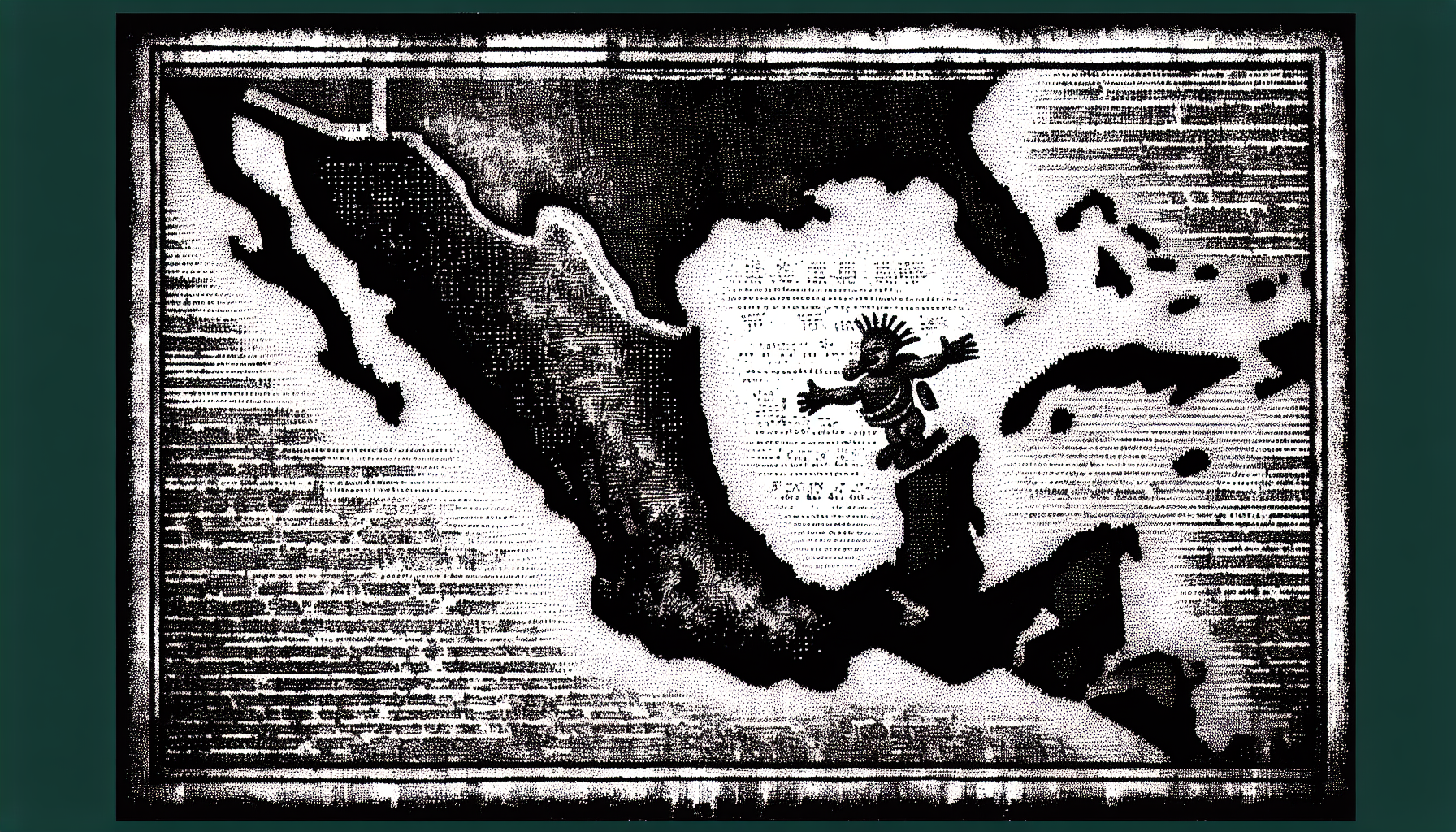
At least 15 Latin American migrants, including citizens from Peru, Ecuador, and Colombia, were deported by the United States to the Democratic Republic of Congo during the week of April 14, 2025. The deportations were confirmed by DRC authorities and a lawyer representing one of the affected migrants, and were reported publicly on April 21. The migrants' connection to the DRC and the legal basis for sending non-African nationals to that country have not been fully detailed in available reporting.
Underlying Drivers
Show reasoning
This story is significant because it represents a notable departure from standard deportation practice, which typically returns migrants to their countries of citizenship or documented residence. Deporting Latin American nationals to sub-Saharan Africa raises substantial legal and human rights questions, including whether individuals had access to legal counsel, whether due process was observed, and what conditions they face upon arrival in a country with which they have no established ties. The DRC itself is experiencing significant internal instability, which adds a humanitarian dimension. Source quality is moderate: DRC authorities and a migrant's lawyer are credible firsthand sources, though full corroboration from US government statements or independent verification remains limited at this stage. The story signals an escalation in the use of third-country deportation as a tool of immigration enforcement.

US Seizes Iranian Cargo Ship; Iran Declines New Talks and States Intent to Retaliate
On April 20, US forces seized an Iranian-flagged cargo ship in an action Iran characterized as a provocation. Following the seizure, Iran declined to participate in new peace negotiations and stated it would retaliate. On April 21, Iranian parliament speaker Mohammad Bagher Ghalibaf stated that Iran would not accept negotiations conducted under threats and that the country was preparing 'new cards on the battlefield.'
Underlying Drivers
Show reasoning
This story carries significant escalation risk given the combination of a direct military seizure, a stated retaliatory intent, and the breakdown of an apparent ceasefire. The importance rating reflects the potential for rapid escalation in an already tense regional environment involving US-Iran tensions, Houthi activity, and broader Middle East instability. Ghalibaf's reference to 'new cards on the battlefield' is vague but deliberately threatening, and warrants monitoring for follow-on actions. Source quality depends on whether the seizure and Ghalibaf statements are confirmed by multiple independent outlets; the framing of a prior ceasefire as 'jeopardized' should be treated cautiously until the ceasefire's terms and status are independently verified.
Japan's Cabinet Approves Guidelines Easing Restrictions on Lethal Weapons Exports
On April 21, Japan's Cabinet, led by Prime Minister Sanae Takaichi, approved new guidelines that ease decades-old restrictions on the export of lethal weapons. The policy change represents a departure from the postwar pacifist framework that has governed Japan's defense posture since the 1940s. The move follows incremental steps taken in recent years to expand Japan's defense industrial capacity and international security partnerships.
Underlying Drivers
Show reasoning
This is a high-significance policy shift because Japan's postwar pacifist identity has been a stabilizing cornerstone of East Asian security architecture for nearly 80 years. Easing lethal weapons exports marks a qualitative change — not merely in defense spending or posture, but in Japan's willingness to become a weapons supplier state. The move has potential second-order effects: it could strain relations with China and South Korea, which remain sensitive to Japanese remilitarization; it could strengthen U.S.-Japan-Australia-Philippines security coordination; and it may open new arms trade relationships in Southeast Asia or Europe. Source quality for this story should be verified against official Cabinet Office releases and Diet records, as the specific scope of the new guidelines — which weapons systems, which recipient countries, under what conditions — is critical context that determines the actual magnitude of the change.
Predictions (1)
By 2026-05-21, China's Ministry of Foreign Affairs will issue a formal statement or spokesperson comment specifically condemning Japan's new lethal weapons export guidelines, using language that references Japan's 'militarist past' or 'historical responsibilities' and explicitly warning recipient countries against purchasing Japanese weapons systems.
Israeli Military Conducts Airstrikes in Southern Lebanon as US Schedules Peace Talks for April 23
The Israeli military conducted airstrikes in southern Lebanon on April 20, targeting individuals it identified as threats to northern Israel or Israeli forces. The United States announced on the same day that a new round of Israel-Lebanon peace negotiations would take place in Washington, D.C., on April 23. The dual developments occur against a backdrop of ongoing ceasefire arrangements established following the 2024 Israel-Hezbollah conflict.
Underlying Drivers
Show reasoning
This story matters because it illustrates the fragile coexistence of active military operations and diplomatic processes in the Israel-Lebanon relationship. The fact that the US is convening talks within days of reported Israeli strikes suggests either confidence that the strikes are contained enough not to derail negotiations, or urgency to lock in diplomatic progress before conditions deteriorate further. Source quality here depends heavily on Israeli military statements, which should be treated as one party's characterization; independent verification of strike targets and casualty data from southern Lebanon remains essential context that is currently absent. The story signals that the post-2024 ceasefire arrangement remains under stress and that the April 23 talks carry meaningful stakes for regional stability.
Predictions (1)
By 2026-04-25, the April 23 US-brokered Israel-Lebanon peace talks in Washington will conclude without a signed agreement or joint communiqué, and at least one party (Israel, Lebanon, or the US) will publicly announce that a follow-up round of negotiations has been scheduled or is under discussion, while Israel continues conducting at least one additional acknowledged military strike in southern Lebanon between April 21 and April 25.
Federal Reserve nominee scheduled to appear before Senate panel amid rate hold signals from officials
A Federal Reserve nominee is scheduled to testify before a Senate panel on April 21, 2026. Most current Fed officials have indicated support for holding the central bank's benchmark interest rate at its present level. The hearing takes place against a backdrop of recent inflation increases that have shaped the Fed's policy deliberations.
Underlying Drivers
Show reasoning
This story matters because Federal Reserve board composition directly shapes U.S. monetary policy, which affects borrowing costs, employment, and inflation for millions of Americans. A nominee whose views diverge from the current Fed consensus could signal a policy shift or internal tension within the institution. The timing — during a period of elevated inflation — amplifies scrutiny of any nominee's inflation-fighting credentials. Source quality here depends on official Senate and Fed communications; the summary reflects scheduled and stated positions, which are verifiable facts. The broader signal is that monetary policy remains a contested political and economic terrain heading into mid-2026.
Predictions (1)
By 2026-05-07, the Senate Banking Committee will advance the Federal Reserve nominee to a full Senate floor vote, with at least one Democratic senator voting in favor in committee, after the nominee explicitly endorses maintaining the current federal funds rate at its present level during the April 21 hearing testimony.
Indonesia Raises Non-Subsidized LPG Prices 18.75%, Announces Diesel Import Ban from July 2026
On April 21, 2025, the Indonesian government, through state energy company Pertamina, increased prices on non-subsidized LPG products by 18.75%. Separately, Indonesian authorities announced a halt to diesel fuel imports effective July 1, 2026, timed to coincide with the mandatory rollout of a B50 biodiesel blend — a fuel mixture containing 50% palm-oil-derived biofuel. The two measures represent distinct but concurrent shifts in Indonesia's domestic energy pricing and supply policy.
Underlying Drivers
Show reasoning
This story carries meaningful significance for regional energy markets and global palm oil demand. Indonesia is the world's largest palm oil producer, and a B50 mandate at national scale would redirect substantial volumes of palm oil into fuel, with downstream effects on food commodity markets and biodiesel trade flows. The diesel import ban, if sustained, would also reduce Indonesia's import bill and foreign exchange pressure — a relevant consideration given recent rupiah volatility. The LPG price adjustment signals the government's willingness to let market signals through on non-subsidized tiers, which may indicate incremental movement away from broad energy subsidies, though politically sensitive subsidized products remain protected. Source quality appears consistent with official government and Pertamina announcements; independent verification of implementation timelines and infrastructure readiness would strengthen confidence in the July 2026 diesel ban target.
Human Rights Organizations Report Increased Restrictions on Civil Society in Burkina Faso
On April 20, Human Rights Watch, the International Federation for Human Rights (FIDH), and other organizations published a report stating that Burkina Faso's military government has intensified restrictions on civil society. The reported measures include new legislation, administrative pressure, and punitive actions directed at both domestic and international organizations operating in the country. Burkina Faso has been governed by a military junta since the 2022 coup led by Captain Ibrahim Traoré.
Underlying Drivers
Show reasoning
This story carries significant weight as part of a broader regional pattern of civil society suppression across Sahel junta-led states. The involvement of credible, established human rights organizations — HRW and FIDH — lends the reporting substantial credibility, though it is worth noting these are advocacy organizations whose findings, while generally reliable, represent one perspective and have not been independently corroborated by government sources or neutral third parties. The story signals continued democratic backsliding in Burkina Faso and raises concerns about accountability for reported abuses in the country's conflict zones. It also has implications for international aid and diplomatic engagement, as donor governments must weigh humanitarian needs against complicity in authoritarian governance. The timing and coordinated multi-organization release suggests a deliberate effort to elevate international attention.
Predictions (1)
By 2026-05-21, at least one EU member state or the European Union collectively will formally announce a partial suspension, review, or conditional freeze of bilateral development aid or budget support to Burkina Faso, explicitly citing the deterioration of civic space or restrictions on civil society organizations as a justification.
Pope Leo XIV Addresses Exploitation and Corruption During Visit to Angola's Diamond Region
Pope Leo XIV made remarks addressing exploitation and corruption by the wealthy and powerful during a visit to Angola's diamond-rich northeastern region on April 20, as part of an 11-day Africa tour. The visit included stops in multiple African nations, with Equatorial Guinea scheduled as the final destination on April 21. The pontiff's comments were delivered in a region historically associated with resource extraction and economic inequality.
Underlying Drivers
Show reasoning
This story carries moderate-to-high significance as a signal of the Catholic Church's continued engagement with economic justice issues in the Global South under the new papacy. Pope Leo XIV's willingness to address corruption and exploitation directly — in a country where such criticism carries political sensitivity — indicates a continuation of the socially engaged papal posture established under Francis. The story's importance is amplified by Angola's role as a major African oil and diamond producer with documented governance challenges. Source quality should be assessed carefully, as papal statements can be selectively quoted; full context of remarks matters for accurate interpretation.
Brent and WTI crude oil prices fall as US-Iran diplomacy raises supply expectations
Brent crude oil declined to $95.04 USD per barrel, a decrease of 0.46% from the previous session. West Texas Intermediate (WTI) crude oil fell to $86.64 USD per barrel, down 0.89% from the prior day. The price movements coincide with reports of anticipated diplomatic engagement between the United States and Iran.
Underlying Drivers
Show reasoning
This story matters because oil prices function as a leading indicator for inflation, transportation costs, and broader economic conditions. A sustained decline driven by diplomatic progress with Iran would represent a structural shift in Middle East supply dynamics, with downstream effects on energy-importing economies and central bank inflation calculations. However, the move is modest — under 1% — suggesting markets are hedging rather than committing to a directional thesis. The story warrants monitoring: if talks advance concretely, further price softening is plausible; if talks stall, a reversal is equally likely. Source quality here depends on the origin of the peace-talk reporting — unverified diplomatic signals have historically caused short-lived price moves.
China's Foreign Ministry States Concern Over US-Philippines-Japan Military Exercises
Chinese Foreign Ministry spokesman Guo Jiakun stated on April 20 that China holds concerns regarding joint military exercises conducted by the United States, the Philippines, and Japan. He said the Asia-Pacific region requires peace and stability, and that introducing external forces creates division. The exercises, referred to as annual drills, involve trilateral military cooperation among the three nations.
Underlying Drivers
Show reasoning
This story reflects a recurring and structurally significant pattern: China's diplomatic pushback against trilateral and multilateral security frameworks it perceives as directed at constraining its regional influence. The statement carries moderate but not exceptional news weight — it is consistent with prior Chinese Foreign Ministry positions and does not represent a policy shift. Its significance lies in the trajectory: as US-Philippines-Japan military coordination intensifies, Chinese objections are likely to escalate in frequency and potentially in tone. Source quality is moderate; the statement originates from an official Chinese government spokesperson, making it authoritative as a statement of Beijing's position but inherently reflecting state messaging objectives. Independent corroboration of the exercises themselves would strengthen the factual record.
TODAY’S PREDICTIONS
4 predictions filed · 4 awaiting outcome
PENDING 82% geopolitics By 2026-05-21, China's Ministry of Foreign Affairs will issue a formal statement or spokesperson comment specifically condemning Japan's new lethal…
Story: Japan's Cabinet Approves Guidelines Easing Restrictions on Lethal Weapons Exports
By 2026-05-21, China's Ministry of Foreign Affairs will issue a formal statement or spokesperson comment specifically condemning Japan's new lethal weapons export guidelines, using language that references Japan's 'militarist past' or 'historical responsibilities' and explicitly warning recipient countries against purchasing Japanese weapons systems.
Reasoning: Causal chain: (1) Japan's Cabinet approval of eased lethal weapons export restrictions is a qualitative escalation beyond prior incremental steps — it signals Japan's willingness to become an arms supplier state, which directly touches China's core sensitivity about Japanese remilitarization. (2) This announcement coincides with China already expressing concern about US-Philippines-Japan military exercises (story #10 on today's front page), meaning Beijing is already in a heightened-response posture regarding Japan's security role in the region. The exercises provide additional context for Beijing to frame Japan's export policy as part of a broader containment strategy. (3) China's standard diplomatic playbook for Japanese defense shifts involves a two-step response: initial spokesperson remarks within days, followed by a more formal/detailed condemnation within 2-4 weeks that ties the policy to historical grievances. The historical framing ('militarist past') is nearly formulaic — it appeared after Japan's 2022 National Security Strategy update, after the 2023 relaxation of fighter jet export rules, and will almost certainly appear here given the greater magnitude of this step. (4) The 'warning to recipient countries' element is the second-order effect: China will not just protest to Japan but will attempt to create diplomatic costs for potential buyers (likely in Southeast Asia), using economic leverage to discourage arms purchases from Japan. This is checkable via MFA press conference transcripts on fmprc.gov.cn.
PENDING 62% geopolitics By 2026-04-25, the April 23 US-brokered Israel-Lebanon peace talks in Washington will conclude without a signed agreement or joint communiqué,…
Story: Israeli Military Conducts Airstrikes in Southern Lebanon as US Schedules Peace Talks for April 23
By 2026-04-25, the April 23 US-brokered Israel-Lebanon peace talks in Washington will conclude without a signed agreement or joint communiqué, and at least one party (Israel, Lebanon, or the US) will publicly announce that a follow-up round of negotiations has been scheduled or is under discussion, while Israel continues conducting at least one additional acknowledged military strike in southern Lebanon between April 21 and April 25.
Reasoning: Causal chain: (1) Israel's continued airstrikes days before the April 23 talks signal that the IDF views military operations as complementary to, not contradictory with, diplomacy — this dual-track approach means Israel has no incentive to pause strikes to create goodwill for the talks. (2) Lebanon and Hezbollah-aligned political actors will use the ongoing strikes to harden their negotiating position, likely demanding a full Israeli withdrawal timeline and cessation of operations as preconditions for deeper concessions — making a breakthrough agreement in a single session extremely unlikely. (3) However, the US has invested diplomatic capital in convening these talks (especially given its broader regional agenda including Iran tensions visible in stories #2 and #9), meaning Washington will push for continuity rather than allow a collapse — the most likely outcome is a procedural commitment to further rounds rather than either a deal or a breakdown. (4) The second-order effect: the talks produce a 'process without progress' dynamic where the existence of ongoing negotiations provides diplomatic cover for continued Israeli military activity, as Israel can point to its participation in talks to deflect international criticism of strikes.
PENDING 42% policy By 2026-05-07, the Senate Banking Committee will advance the Federal Reserve nominee to a full Senate floor vote, with at…
Story: Federal Reserve nominee scheduled to appear before Senate panel amid rate hold signals from officials
By 2026-05-07, the Senate Banking Committee will advance the Federal Reserve nominee to a full Senate floor vote, with at least one Democratic senator voting in favor in committee, after the nominee explicitly endorses maintaining the current federal funds rate at its present level during the April 21 hearing testimony.
Reasoning: Causal chain: (1) The nominee is appearing before the Senate Banking Committee on April 21 in an environment where nearly all sitting Fed officials signal support for holding rates steady. To secure confirmation, the nominee has strong incentive to align with this consensus rather than signal dovish or hawkish deviation, especially given elevated inflation. (2) By endorsing the rate-hold consensus during testimony, the nominee reduces the political cost for moderate senators (including potentially one or two Democrats) to support them, since a rate-hold stance is the least controversial position and insulates senators from blame if inflation persists. (3) Senate Banking Committee markups typically occur 1-2 weeks after hearings; given the political incentive to fill Fed vacancies during a period of monetary policy uncertainty, the committee chair will schedule a vote promptly. The second-order effect is that bipartisan committee advancement signals the nominee will be confirmed, which in turn stabilizes market expectations about Fed board composition and reinforces the rate-hold consensus through mid-2026. Historical precedent: most Fed nominees who align with prevailing board consensus during testimony clear committee within 2-3 weeks.
PENDING 35% society By 2026-05-21, at least one EU member state or the European Union collectively will formally announce a partial suspension, review,…
Story: Human Rights Organizations Report Increased Restrictions on Civil Society in Burkina Faso
By 2026-05-21, at least one EU member state or the European Union collectively will formally announce a partial suspension, review, or conditional freeze of bilateral development aid or budget support to Burkina Faso, explicitly citing the deterioration of civic space or restrictions on civil society organizations as a justification.
Reasoning: Causal chain: (1) The coordinated HRW/FIDH report, published on April 20, is designed to trigger policy responses from Western donor governments — this is a well-established advocacy-to-policy pipeline. (2) European donors (France, Germany, EU institutions) are Burkina Faso's largest bilateral and multilateral aid providers, and they have previously conditioned aid on governance benchmarks. The EU already partially suspended cooperation after the 2022 coup and has maintained a fragile engagement posture. (3) The report provides documented evidence that the junta is not merely failing to restore democratic governance but is actively intensifying repression — this shifts the framing from 'stalled transition' to 'deepening authoritarianism,' which makes continued unconditional aid politically untenable for European governments facing domestic scrutiny. (4) The pattern from Mali is instructive: after similar HRW/FIDH reporting cycles in 2022-2023, several EU members announced aid reviews within 4-6 weeks. Burkina Faso's simultaneous pivot toward Russian-linked security partners further reduces Western governments' political incentive to maintain engagement. (5) The second-order mechanism: European foreign ministries use NGO reports as political cover for decisions they are already inclined to make — the report provides the trigger, not the cause. The underlying cause is the junta's strategic realignment away from Western partners, which makes aid continuation strategically unproductive from the donor perspective.
No detailed attribution available.
‘; content.innerHTML = html; overlay.style.display = ‘flex’; } function escH(s) { var d = document.createElement(‘div’); d.textContent = s || ”; return d.innerHTML; }