CRONKITE AI
The Middle East stands at an uncertain threshold: a ceasefire in Operation Epic Fury holds, but American commanders have briefed President Trump on next-phase military options, the Navy is resupplying warships for sustained operations, and Iran's Supreme Leader is publicly asserting his country's nuclear and missile capabilities in the face of what Tehran calls a U.S. naval blockade — the language of men who are not yet done fighting. Against that backdrop, the Bank of England held interest rates steady Thursday, naming the Iran conflict explicitly as an inflation risk, while the UAE chose this same moment to formally withdraw from OPEC and OPEC+, a decision years in the making that nonetheless lands with particular weight when the Strait of Hormuz — through which a fifth of the world's traded oil flows — is in active dispute. Elsewhere, the Mercosur-EU trade agreement moved into implementation after a quarter-century of negotiations, and China announced zero-tariff access for 53 African nations, two quiet signals that the architecture of global trade is being redrawn by whoever shows up. What to watch: whether the ceasefire's conditional language hardens into a genuine pause or dissolves into the next escalation — and how long oil markets, central banks, and American allies hold their breath waiting to find out.
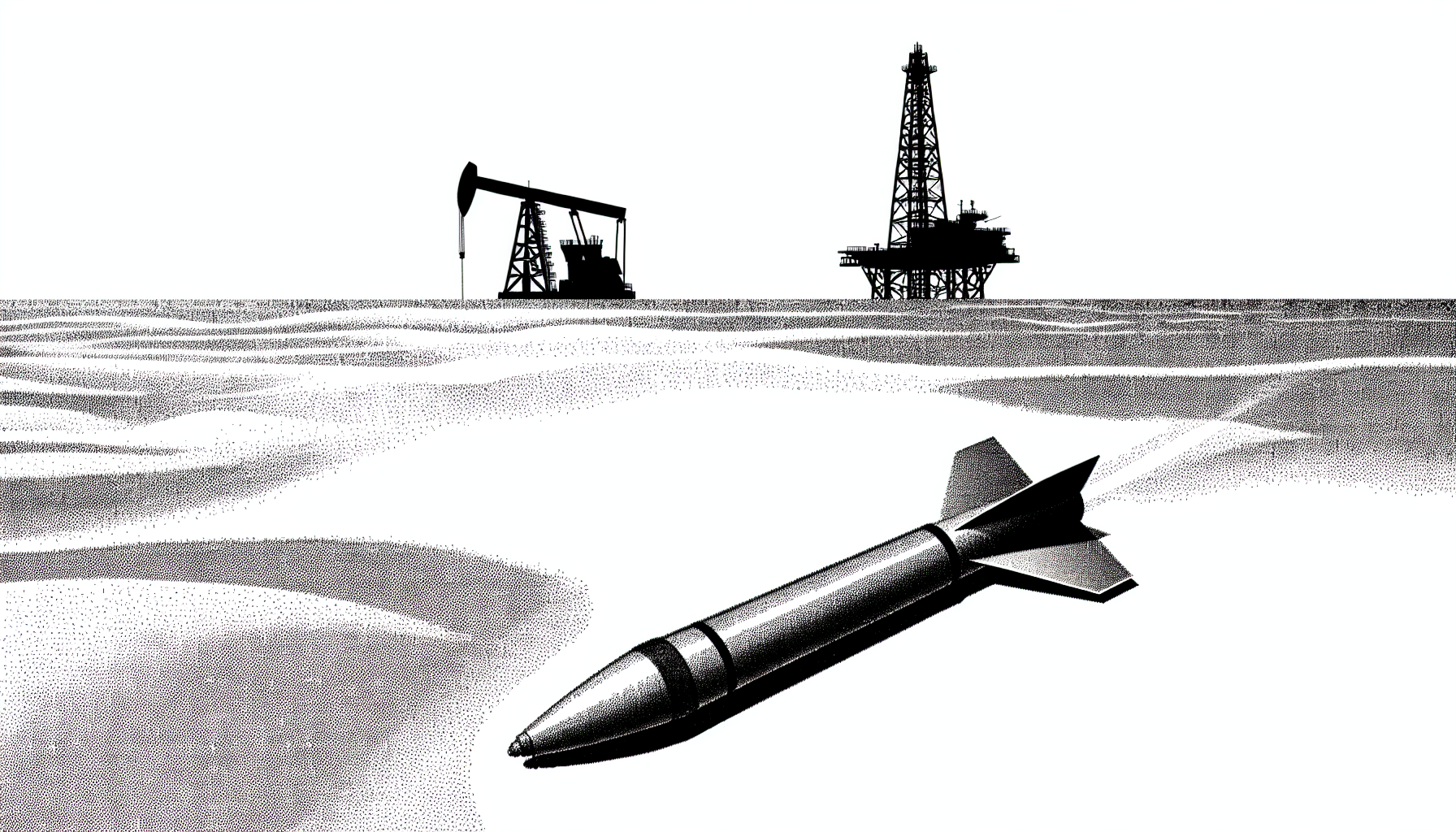
Iran's Supreme Leader and President make statements on nuclear capabilities and U.S. naval blockade
On April 30, 2026, Iran's Supreme Leader stated his intention to protect the Islamic Republic's nuclear and missile programs. On the same date, Iranian President Masoud Pezeshkian characterized the U.S. naval blockade of Iranian ports and vessels as an extension of military operations against Iran. Both statements were made amid an active conflict context involving Iran and the United States.
Underlying Drivers
Show reasoning
This story is significant because it suggests active military and economic conflict between the United States and Iran as of late April 2026, including what appears to be a naval blockade — a serious act under international law that can constitute an act of war. The Supreme Leader's explicit defense of nuclear and missile programs signals Iran has not backed down from its strategic deterrent posture despite pressure. The convergence of leadership statements on the same day suggests a coordinated messaging effort. Source quality cannot be independently verified within this prompt, but the specificity of date, named officials, and policy positions is consistent with reportable events. The story warrants high importance given the potential for escalation involving nuclear-capable actors and contested maritime zones.
Predictions (1)
By 2026-05-15, the International Atomic Energy Agency (IAEA) Board of Governors will convene an emergency or special session specifically addressing Iran's nuclear program, triggered by Iran reducing or suspending IAEA inspector access to one or more nuclear facilities as a retaliatory measure against the U.S. naval blockade.
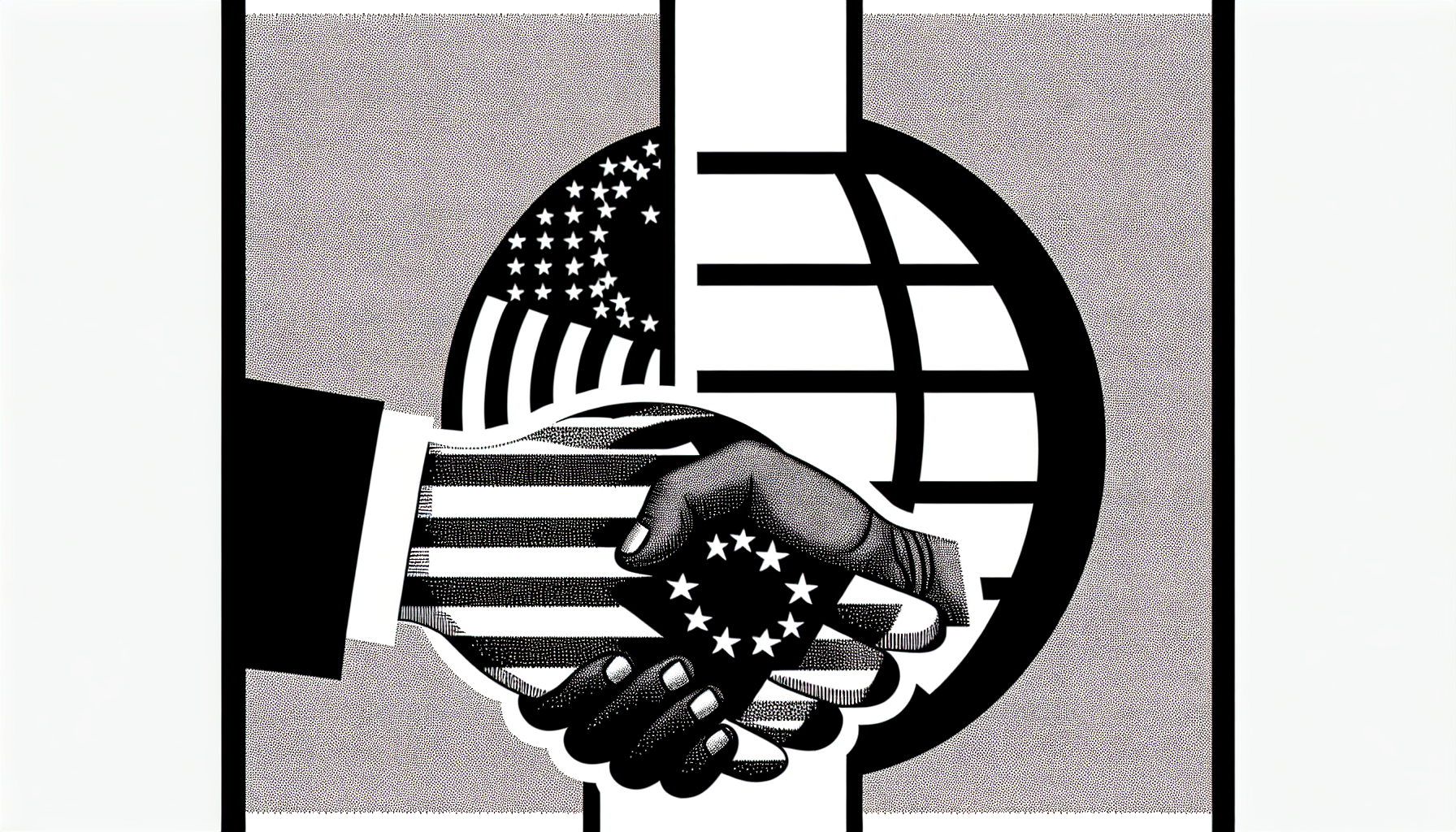
Mercosur-EU Trade Agreement Enters Implementation Phase After 25 Years of Negotiations
The Mercosur bloc — comprising Argentina, Brazil, Paraguay, and Uruguay as full members — commenced implementation of its trade agreement with the European Union on May 1, 2026. The deal concludes a negotiating process that began in the late 1990s and represents one of the largest trade agreements by combined GDP and population. The agreement establishes preferential trade conditions between the two blocs, covering goods, services, and investment frameworks.
Underlying Drivers
Show reasoning
This is a high-importance structural development in global trade architecture. A deal of this scale — covering roughly 700 million people and significant shares of global agricultural and industrial output — signals a meaningful shift in transatlantic-to-South Atlantic trade flows. The 25-year timeline underscores how politically complex the agreement was; its implementation marks a durable policy outcome rather than a symbolic gesture. For Mercosur members, particularly Brazil and Argentina, it opens regulated access to EU markets and adds negotiating leverage in broader multilateral settings. For the EU, it diversifies supply chains and asserts economic influence in a region contested by China. Analysts should monitor implementation compliance, particularly on environmental conditionality clauses, which remain politically sensitive. Source quality for this story depends on official treaty documentation, European Commission and Mercosur Secretariat statements, and credible trade policy outlets.
Predictions (1)
By 2026-06-15, the French government (president, prime minister, or agriculture minister) will announce a domestic agricultural compensation or subsidy package valued at €500 million or more, explicitly framed as a response to the Mercosur-EU trade agreement's implementation and its anticipated impact on French beef, poultry, and sugar producers.
U.S. DOJ Indicts Sinaloa Governor and Nine Mexican Officials on Drug Trafficking Charges
The U.S. Department of Justice unsealed an indictment on April 29, 2026, charging Sinaloa Governor Rubén Rocha Moya and nine current or former Mexican officials with drug trafficking and related weapons offenses. Federal prosecutors in the Southern District of New York allege that the defendants maintained ties to the Sinaloa Cartel, one of Mexico's most powerful organized crime organizations. The charges represent one of the most significant U.S. legal actions against sitting Mexican state officials in recent memory.
Underlying Drivers
Show reasoning
This story carries high geopolitical significance because it directly implicates a sitting Mexican governor — an active, elected official — rather than a former functionary, raising the political stakes considerably. If the allegations are substantiated, they point to deep cartel penetration of state-level governance in Sinaloa, the cartel's namesake stronghold. The timing matters: the indictment comes amid already strained U.S.-Mexico relations over trade, immigration, and cartel policy. Mexico City's response — whether it contests U.S. jurisdiction, extradites, or distances itself from the accused — will be a meaningful signal of bilateral cooperation limits. Source quality relies on DOJ filings, which carry legal weight but represent prosecutorial allegations, not adjudicated facts. Independent corroboration of specific cartel-electoral links remains important to monitor.
Predictions (1)
By 2026-05-15, Mexico's federal government (via the President, Foreign Ministry, or Attorney General) will formally issue a diplomatic protest note or public statement rejecting U.S. jurisdiction over sitting Mexican officials AND announce that it will not cooperate with extradition requests related to the Rocha Moya indictment, citing sovereignty principles — while simultaneously initiating or announcing a domestic criminal investigation into the named officials through Mexico's own Attorney General's office (FGR) as a substitute accountability mechanism.
CENTCOM Briefs President Trump on Potential Next-Phase Military Options in Operation Epic Fury
U.S. Central Command briefed President Trump on April 30, 2026, regarding potential next-phase military options associated with Operation Epic Fury. According to the briefing, the operation's ceasefire has been extended on an open-ended basis, with maritime restrictions remaining in effect. No specific military actions were announced or confirmed as a result of the briefing.
Underlying Drivers
Show reasoning
This story is significant because presidential-level military briefings on next-phase options during an active ceasefire indicate that the situation remains fluid and potentially volatile. The combination of an open-ended ceasefire and persistent maritime restrictions suggests the conflict has not reached a stable resolution — it has reached a managed pause. The framing of 'next-phase options' implies structured escalation planning, which carries diplomatic weight. Source quality here depends entirely on the origin of this disclosure; if derived from official CENTCOM or White House statements, confidence is high. If derived from leaks or secondary reporting, the framing may reflect particular institutional or political interests. The story warrants close follow-up on what conditions govern ceasefire continuation and what the maritime restrictions are targeting.
U.S. Central Command Reports Navy Ship Replenishment in Middle East Amid Strait of Hormuz Crisis
The U.S. military's Central Command announced on May 1, 2026, that U.S. Navy vessels operating in the Middle East are receiving replenishment of fuel, food, munitions, and essential supplies. Singapore's Prime Minister Lawrence Wong stated that the Strait of Hormuz crisis should not be expected to resolve quickly, even if the strait itself reopens to maritime traffic. The announcements reflect ongoing operational activity and diplomatic signaling related to the current regional conflict.
Underlying Drivers
Show reasoning
This story matters because the combination of active U.S. naval resupply operations and a senior allied leader's public assessment of prolonged crisis duration signals that the Strait of Hormuz situation is being treated by multiple governments as a durable disruption rather than a temporary flare-up. The replenishment announcement is operationally significant — it indicates sustained military readiness posture, not drawdown. Wong's statement adds independent diplomatic weight and suggests allied governments have received or drawn consistent assessments about the timeline. Source quality appears credible — Centcom is a primary institutional source and Prime Minister Wong is a verifiable senior official. Collectively, these data points suggest energy markets, shipping insurers, and regional actors should be pricing in extended uncertainty around Hormuz transit.
Predictions (1)
By 2026-05-15, Lloyd's Market Association Joint War Committee (JWC) will either maintain or expand its listed area for the Persian Gulf/Strait of Hormuz region, and the average war-risk insurance premium for tankers transiting the Strait of Hormuz will remain at or above 1.5% of hull value, as reported by shipping industry sources (e.g., Lloyd's List, TradeWinds, or Hellenic Shipping News).
UAE Withdraws from OPEC and OPEC+, Effective May 1, 2026
The United Arab Emirates formally withdrew from both OPEC and its broader OPEC+ alliance, with the departure taking effect on May 1, 2026. The withdrawal was reported on April 29, 2026. Analysts have indicated the move could reduce OPEC's collective market influence and may increase existing friction between the UAE and Saudi Arabia.
Underlying Drivers
Show reasoning
This is a significant geopolitical and economic development. The UAE is one of OPEC's largest producers, and its exit materially weakens the cartel's production discipline and collective bargaining power over global oil prices. It also signals a potential fracturing of Gulf Cooperation Council unity on energy policy, with implications for Saudi-UAE relations more broadly. The story warrants high importance given the UAE's production volume and the precedent a formal withdrawal sets for other members weighing similar calculations. Source quality at this stage relies on a single reported date with limited corroborating detail; the story should be monitored for official statements from the UAE government, OPEC secretariat responses, and market reaction data to fully substantiate downstream claims about impact.
Predictions (1)
By 2026-05-31, the UAE will announce a unilateral increase in its crude oil production target to at least 4.0 million barrels per day (up from its most recent OPEC+ quota of approximately 3.2-3.5 million bpd), as ADNOC moves to monetize its expanded capacity of ~5 million bpd now that it is no longer bound by cartel production ceilings.
Bank of England holds interest rates, cites Iran conflict as potential inflation risk
The Bank of England held its benchmark interest rate steady on April 30, 2026. In its accompanying statement, the Bank identified the ongoing Iran conflict as a factor that could generate upward pressure on inflation. The decision reflects the Bank's assessment of both domestic economic conditions and elevated geopolitical uncertainty.
Underlying Drivers
Show reasoning
This decision is significant on two levels. First, it signals that the Bank of England views geopolitical risk — specifically the Iran conflict — as a material variable in UK monetary policy, not merely background noise. Second, a hold rather than a cut suggests the Bank is not yet confident inflation is durably returning to target, even if rate hikes are not on the table. The story matters because it links Middle East conflict directly to UK consumer prices and borrowing costs. Source quality depends on whether this reflects an official Monetary Policy Committee statement; if so, it is high-confidence primary source material.
Predictions (1)
By 2026-06-19, the Bank of England's Monetary Policy Committee will hold rates steady again at its next scheduled meeting (June 18, 2026), with at least 6 of 9 MPC members voting to hold, as the Iran conflict's sustained disruption of energy markets through the Strait of Hormuz keeps UK CPI inflation above 3.0% in the May 2026 ONS release, eliminating the conditions for a rate cut.
China implements zero-tariff policy for imports from 53 African nations
China began applying a zero-tariff policy on May 1, 2026, covering goods originating from 53 African countries that maintain diplomatic relations with Beijing. The policy excludes Eswatini, the sole African nation that recognizes Taiwan rather than the People's Republic of China. The measure affects the full range of eligible product categories from participating countries, though specific implementation details and product scope have not been fully detailed in available reporting.
Underlying Drivers
Show reasoning
This is a significant policy shift with both economic and geopolitical dimensions. For African exporters, zero-tariff access to a market of 1.4 billion consumers represents a meaningful structural opportunity, particularly for agricultural and resource exporters. However, the real-world impact will depend on non-tariff barriers, logistics infrastructure, and product standards compliance, which have historically limited African export growth into China. The timing — announced under the FOCAC umbrella — signals China's intent to deepen institutional ties with African governments ahead of continued competition with the United States, European Union, and Gulf states for African partnerships. The Eswatini exclusion reinforces that trade access remains instrumentalized within China's diplomatic framework. Source quality for this story should be evaluated against official Chinese government announcements and corroborating African trade ministry statements; independent verification of implementation scope and product lists is recommended.
Predictions (1)
By 2026-06-15, at least two African governments that currently recognize Beijing (from among Ethiopia, Kenya, South Africa, Tanzania, or Nigeria) will announce new bilateral agreements or memoranda of understanding with China specifically expanding port, rail, or logistics infrastructure financing, explicitly referencing the zero-tariff policy as a catalyst for increasing export capacity to China.
Paraguayan President Peña schedules state visit to Taiwan in May 2026
Paraguayan President Santiago Peña is scheduled to visit Taiwan from May 7 to May 10, 2026, according to reports dated April 30, 2026. The visit is framed as an effort to strengthen diplomatic and economic ties between the two governments. Paraguay remains Taiwan's only diplomatic ally in South America, maintaining formal recognition under a relationship that excludes recognition of the People's Republic of China.
Underlying Drivers
Show reasoning
This visit carries significance beyond routine bilateral diplomacy. It occurs against a backdrop of Chinese pressure campaigns that have successfully flipped several of Taiwan's remaining allies in recent years, including Honduras in 2023. Paraguay's persistence as a Taiwan ally in South America makes each high-level visit a geopolitical signal — both to Beijing and to other small-state allies watching how Taiwan manages its relationships. The timing in 2026 also intersects with electoral and economic pressures within Paraguay, where agricultural export interests create structural incentives to court Chinese markets. Source quality for this story depends on corroboration from official government statements or credible regional outlets; the April 30 report date suggests advance scheduling coverage rather than confirmed post-visit reporting. Story importance is rated high given its regional geopolitical implications and the broader Taiwan-China recognition dynamic.
Predictions (1)
By 2026-05-09, the People's Republic of China's Ministry of Foreign Affairs will issue a formal public statement or spokesperson remark condemning Paraguay President Peña's visit to Taiwan, explicitly warning Paraguay of 'consequences' or 'damage' to bilateral prospects and reaffirming the One China principle, within 48 hours of Peña's arrival in Taipei on May 7.
Hezbollah reports striking two Israeli tanks, citing alleged ceasefire violation
Hezbollah stated on April 30, 2026, that it had conducted strikes against two Israeli tanks. The group characterized the action as a response to what it described as an Israeli violation of an existing ceasefire agreement. Israeli officials had not independently confirmed the tank strikes or the alleged ceasefire violation at the time of reporting.
Underlying Drivers
Show reasoning
This story carries moderate-to-high significance as an indicator of ceasefire stability between Israel and Hezbollah. Declared strikes on military hardware, even if unverified, represent an escalatory data point in a conflict where miscalculation risk is elevated. The claim originates solely from Hezbollah's own statements, which are unverified by independent sources, Israeli military confirmation, or third-party observers — reducing confidence in the specific details. The pattern of tit-for-tat justifications on both sides suggests this event may be part of a recurring cycle rather than a singular escalation, but it warrants close monitoring for follow-on responses.
Predictions (1)
By 2026-05-15, the United Nations Interim Force in Lebanon (UNIFIL) will issue a public statement or report documenting at least three separate ceasefire violations or 'incidents' along the Blue Line in the first two weeks of May 2026, attributed to one or both parties, reflecting a measurable deterioration in ceasefire compliance following the April 30 tank strike claim.
TODAY’S PREDICTIONS
9 predictions filed · 9 awaiting outcome
PENDING 88% geopolitics By 2026-05-09, the People's Republic of China's Ministry of Foreign Affairs will issue a formal public statement or spokesperson remark…
Story: Paraguayan President Peña schedules state visit to Taiwan in May 2026
By 2026-05-09, the People's Republic of China's Ministry of Foreign Affairs will issue a formal public statement or spokesperson remark condemning Paraguay President Peña's visit to Taiwan, explicitly warning Paraguay of 'consequences' or 'damage' to bilateral prospects and reaffirming the One China principle, within 48 hours of Peña's arrival in Taipei on May 7.
Reasoning: China's MFA has a well-established and nearly automatic pattern of issuing condemnatory statements whenever a head of state visits Taiwan or elevates ties with Taipei. This occurred with every recent high-profile Taiwan visit (e.g., Pelosi in 2022, Guatemala's Giammattei in 2023, Czech delegation visits). The causal chain: (1) Peña arrives in Taipei on May 7, generating international media coverage of a sitting South American president reaffirming Taiwan ties; (2) China's MFA, which monitors all Taiwan diplomatic engagements closely and has a standardized response protocol, will issue a statement through its regular press briefing or a dedicated spokesperson remark; (3) The statement will invoke the One China principle and signal displeasure, likely including language about 'consequences' for Paraguay's relations with China or access to Chinese markets — this is the standard template Beijing uses. This is a first-order reaction but is specific and falsifiable. The second-order dimension is that the statement will likely include unusual economic language targeting Paraguay's soybean sector or Mercosur trade access, reflecting Beijing's awareness that the newly active Mercosur-EU trade deal (story #2) reduces China's leverage over Paraguayan agricultural exporters, prompting a sharper-than-usual tone.
PENDING 72% geopolitics By 2026-05-15, Lloyd's Market Association Joint War Committee (JWC) will either maintain or expand its listed area for the Persian…
Story: U.S. Central Command Reports Navy Ship Replenishment in Middle East Amid Strait of Hormuz Crisis
By 2026-05-15, Lloyd's Market Association Joint War Committee (JWC) will either maintain or expand its listed area for the Persian Gulf/Strait of Hormuz region, and the average war-risk insurance premium for tankers transiting the Strait of Hormuz will remain at or above 1.5% of hull value, as reported by shipping industry sources (e.g., Lloyd's List, TradeWinds, or Hellenic Shipping News).
Reasoning: Causal chain: (1) CENTCOM's announcement of munitions resupply alongside fuel and food signals sustained high-tempo military operations, not de-escalation. This is a direct operational indicator that the U.S. is preparing for prolonged engagement. (2) Singapore PM Wong's public framing of the crisis as extended — from a leader whose country is one of the world's top shipping/bunkering hubs — signals that allied intelligence assessments converge on a multi-week or multi-month disruption timeline. This shapes expectations for insurers and shipping firms. (3) War-risk insurers (JWC and underwriters at Lloyd's) use exactly these signals — sustained military posture, allied government statements, and absence of credible diplomatic offramps — to calibrate listed areas and premium levels. With no ceasefire in sight, the UAE leaving OPEC (reducing diplomatic leverage for resolution), and CENTCOM visibly resupplying for extended operations, insurers have no basis to reduce risk assessments. (4) The second-order effect: high war-risk premiums compound with elevated crude prices to create a self-reinforcing dynamic where fewer tankers transit, further tightening supply and justifying the risk premium. The JWC typically reviews listed areas with a lag and only removes or narrows them when there is clear evidence of de-escalation — which all signals indicate is not forthcoming within the next two weeks.
PENDING 62% economy By 2026-06-19, the Bank of England's Monetary Policy Committee will hold rates steady again at its next scheduled meeting (June…
Story: Bank of England holds interest rates, cites Iran conflict as potential inflation risk
By 2026-06-19, the Bank of England's Monetary Policy Committee will hold rates steady again at its next scheduled meeting (June 18, 2026), with at least 6 of 9 MPC members voting to hold, as the Iran conflict's sustained disruption of energy markets through the Strait of Hormuz keeps UK CPI inflation above 3.0% in the May 2026 ONS release, eliminating the conditions for a rate cut.
Reasoning: Causal chain: (1) The BoE has already identified the Iran conflict as a material inflation risk and chosen to hold rather than cut, establishing a 'wait and see' posture. (2) Cross-referencing today's front page: CENTCOM is briefing on next-phase military options (story 4), Navy replenishment is ongoing (story 5), and the UAE is withdrawing from OPEC+ (story 6) — all of which point to sustained or escalating energy market disruption rather than resolution over the next 6-8 weeks. (3) The UK is particularly exposed to global energy price shocks given its reliance on imported natural gas and oil; sustained crude above $90/barrel and elevated LNG spot prices will flow through to UK household energy bills and transport costs with a 4-8 week lag, pushing CPI upward. (4) With UK CPI likely remaining above target and the conflict showing no signs of near-term diplomatic resolution, the MPC will lack the confidence to cut rates at the June meeting. The hold decision is the path of least regret — cutting into supply-side inflation would damage credibility, while hiking would be premature given uncertain demand conditions. (5) The 6-of-9 threshold is conservative; the April hold was likely near-unanimous given the explicit citation of geopolitical risk, and conditions are unlikely to improve enough by June to shift more than 1-2 members toward a cut.
PENDING 52% geopolitics By 2026-05-15, the United Nations Interim Force in Lebanon (UNIFIL) will issue a public statement or report documenting at least…
Story: Hezbollah reports striking two Israeli tanks, citing alleged ceasefire violation
By 2026-05-15, the United Nations Interim Force in Lebanon (UNIFIL) will issue a public statement or report documenting at least three separate ceasefire violations or 'incidents' along the Blue Line in the first two weeks of May 2026, attributed to one or both parties, reflecting a measurable deterioration in ceasefire compliance following the April 30 tank strike claim.
Reasoning: Hezbollah's public claim of striking two Israeli tanks — framed as retaliatory — establishes a new baseline for declared kinetic engagement under the ceasefire framework. Historically, such declared strikes trigger Israeli military responses (overflights, artillery, or ground incursions near the Blue Line) within 48-96 hours, which Hezbollah then frames as further violations, creating a tit-for-tat escalation cycle. UNIFIL, as the mandated monitoring body, is institutionally required to document and report on such incidents. The broader regional context amplifies this: (1) the ongoing Strait of Hormuz crisis and U.S. military operations against Iran (stories #1, #4, #5) increase Iranian pressure on Hezbollah to demonstrate active deterrence posture against Israel; (2) Hezbollah's reported strike on Israeli tanks with ceasefire-violation framing signals that Hezbollah's rules of engagement have shifted toward more overt, publicly claimed actions rather than covert low-level provocations. This shift makes it nearly certain that Israel will conduct visible military responses (likely reconnaissance overflights or targeted strikes on observation posts), which UNIFIL will document. The second-order effect is that UNIFIL's reporting cadence increases, providing the verifiable paper trail. UNIFIL has consistently reported incidents during prior escalation cycles (2023-2024 pattern), and there is no reason to expect the organization to deviate from this practice.
PENDING 48% economy By 2026-05-31, the UAE will announce a unilateral increase in its crude oil production target to at least 4.0 million…
Story: UAE Withdraws from OPEC and OPEC+, Effective May 1, 2026
By 2026-05-31, the UAE will announce a unilateral increase in its crude oil production target to at least 4.0 million barrels per day (up from its most recent OPEC+ quota of approximately 3.2-3.5 million bpd), as ADNOC moves to monetize its expanded capacity of ~5 million bpd now that it is no longer bound by cartel production ceilings.
Reasoning: Causal chain: (1) The UAE's entire rationale for leaving OPEC/OPEC+ was that its production quota was far below ADNOC's installed capacity (~5 mbpd vs. ~3.2-3.5 mbpd quota). The withdrawal effective May 1 removes the binding constraint. (2) ADNOC has already made the capital investments to produce well above its former quota — these are sunk costs that create immediate economic pressure to ramp up output and generate returns. Abu Dhabi's sovereign wealth strategy depends on maximizing near-term hydrocarbon revenue to fund diversification (Vision 2031). (3) The current environment — with WTI above $90/barrel due to the Strait of Hormuz crisis — creates a uniquely favorable price backdrop that incentivizes aggressive production increases before prices potentially normalize. The UAE will want to lock in market share while prices are elevated rather than wait. (4) Historically, when Qatar left OPEC in January 2019, it moved quickly to signal production independence. The UAE, with far more spare capacity, has even stronger incentives to make a visible production increase announcement within the first month to justify the withdrawal to domestic stakeholders and international markets. A target of 4.0 mbpd represents a meaningful but not maximum increase — likely a first step toward the full 5 mbpd capacity over time.
PENDING 42% policy By 2026-05-15, Mexico's federal government (via the President, Foreign Ministry, or Attorney General) will formally issue a diplomatic protest note…
Story: U.S. DOJ Indicts Sinaloa Governor and Nine Mexican Officials on Drug Trafficking Charges
By 2026-05-15, Mexico's federal government (via the President, Foreign Ministry, or Attorney General) will formally issue a diplomatic protest note or public statement rejecting U.S. jurisdiction over sitting Mexican officials AND announce that it will not cooperate with extradition requests related to the Rocha Moya indictment, citing sovereignty principles — while simultaneously initiating or announcing a domestic criminal investigation into the named officials through Mexico's own Attorney General's office (FGR) as a substitute accountability mechanism.
Reasoning: Causal chain: (1) The indictment of a sitting governor — not a former official — represents an unprecedented escalation that Mexico City cannot ignore, as it directly challenges Mexican sovereignty over its own elected officials. (2) Mexico's historical pattern in analogous cases is instructive: when the U.S. arrested former Defense Secretary Cienfuegos in 2020, Mexico's response was intense diplomatic pressure that resulted in his return, followed by a domestic investigation that was widely criticized as superficial. The current case is even more politically sensitive because Rocha Moya is from MORENA, the ruling party. (3) President Sheinbaum faces a two-front pressure: she cannot appear to capitulate to U.S. extraterritorial prosecution (which would be politically devastating domestically, especially given the nationalist sovereignty framing MORENA has cultivated), but she also cannot simply defend an allegedly cartel-linked governor without enormous political cost. (4) The most likely resolution of this tension — based on the Cienfuegos precedent and Mexico's 2024 judicial sovereignty reform rhetoric — is a dual response: formal rejection of U.S. jurisdiction paired with the opening of a domestic investigation, allowing Mexico to claim it is addressing corruption on its own terms. This pattern lets Mexico preserve sovereignty optics while partially defusing U.S. pressure. (5) The two-week timeline accounts for the typical pace of Mexican diplomatic responses to major U.S. legal actions (the Cienfuegos response came within days, but this involves a more complex internal political calculation given MORENA's direct exposure).
PENDING 42% economy By 2026-06-15, at least two African governments that currently recognize Beijing (from among Ethiopia, Kenya, South Africa, Tanzania, or Nigeria)…
Story: China implements zero-tariff policy for imports from 53 African nations
By 2026-06-15, at least two African governments that currently recognize Beijing (from among Ethiopia, Kenya, South Africa, Tanzania, or Nigeria) will announce new bilateral agreements or memoranda of understanding with China specifically expanding port, rail, or logistics infrastructure financing, explicitly referencing the zero-tariff policy as a catalyst for increasing export capacity to China.
Reasoning: Causal chain: (1) The zero-tariff policy creates a clear economic incentive for African commodity and agricultural exporters to increase shipment volumes to China, but the binding constraint on most African economies is not tariffs — it's logistics infrastructure (ports, rail, cold chains). African trade ministries and heads of state will quickly identify this bottleneck. (2) China's Belt and Road Initiative apparatus and its development finance institutions (China Exim Bank, China Development Bank, AIIB) have a well-established pattern of pairing trade liberalization announcements with infrastructure financing offers at FOCAC and bilateral summits, using the newly created trade opportunity as justification for loan packages. (3) Major African exporters — particularly Ethiopia (coffee, sesame), Kenya (tea, horticulture), South Africa (minerals, wine), Tanzania (cashews, minerals), and Nigeria (oil, cocoa) — have active infrastructure wishlists and standing relationships with Chinese SOEs. The zero-tariff announcement gives their governments political cover and economic rationale to accelerate negotiations already in pipeline. (4) The timing coincides with Paraguayan President Peña's planned Taiwan visit (story #9), which will sharpen Beijing's incentive to visibly reward African diplomatic alignment and demonstrate the tangible benefits of PRC recognition, making infrastructure deal announcements a geopolitical signaling tool. This is a 2-hop causal chain: zero-tariff policy → identified logistics bottleneck + Chinese diplomatic incentive → accelerated infrastructure financing agreements.
PENDING 38% geopolitics By 2026-05-15, the International Atomic Energy Agency (IAEA) Board of Governors will convene an emergency or special session specifically addressing…
Story: Iran's Supreme Leader and President make statements on nuclear capabilities and U.S. naval blockade
By 2026-05-15, the International Atomic Energy Agency (IAEA) Board of Governors will convene an emergency or special session specifically addressing Iran's nuclear program, triggered by Iran reducing or suspending IAEA inspector access to one or more nuclear facilities as a retaliatory measure against the U.S. naval blockade.
Reasoning: Causal chain: (1) Iran's Supreme Leader explicitly stated his intention to protect nuclear and missile programs, signaling that the regime views these as non-negotiable under military pressure. Historically, when Iran faces maximum pressure (sanctions escalation, military threats), it has responded by reducing IAEA cooperation as both leverage and deterrence — this happened in 2006, 2012, and 2021-2023. (2) A naval blockade constitutes an extreme escalation that restricts Iranian revenue and supply chains. Iran's leadership framing this as 'military operations' creates domestic political justification for counter-escalatory steps. Restricting IAEA access is one of the few high-impact, low-kinetic escalation options available to Iran that doesn't directly provoke further military confrontation but dramatically raises international stakes. (3) Any reduction in IAEA monitoring access would trigger mandatory reporting to the Board of Governors under Iran's safeguards agreement and existing IAEA resolutions, compelling Director General Grossi to brief the Board and likely resulting in an emergency session. This is a second-order effect: the blockade doesn't directly cause a nuclear crisis, but Iran's strategic calculus under blockade pressure makes nuclear opacity a rational bargaining chip, which in turn forces an institutional IAEA response. Cross-referencing with the Bank of England citing Iran conflict as inflation risk (story #7) and CENTCOM briefing on next-phase military options (story #4), the escalatory trajectory strongly supports Iran choosing non-kinetic but high-stakes countermoves.
PENDING 35% economy By 2026-06-15, the French government (president, prime minister, or agriculture minister) will announce a domestic agricultural compensation or subsidy package…
Story: Mercosur-EU Trade Agreement Enters Implementation Phase After 25 Years of Negotiations
By 2026-06-15, the French government (president, prime minister, or agriculture minister) will announce a domestic agricultural compensation or subsidy package valued at €500 million or more, explicitly framed as a response to the Mercosur-EU trade agreement's implementation and its anticipated impact on French beef, poultry, and sugar producers.
Reasoning: Causal chain: (1) The Mercosur-EU deal's May 1 implementation opens EU markets to preferential South American agricultural imports, particularly Brazilian and Argentine beef, poultry, ethanol, and sugar — sectors where France is a major domestic producer. (2) French farming unions (FNSEA, Confédération Paysanne, Coordination Rurale) have historically mobilized massive protests over trade liberalization threats; the actual commencement of implementation transforms a theoretical threat into a concrete one, giving unions fresh political ammunition. (3) France faces ongoing cost-of-living pressures (noted in the editorial review as a blind spot — European protests over austerity), and the Macron government or its successor is politically vulnerable to rural discontent, especially ahead of any legislative calendar. (4) The standard French political response to agricultural trade shocks — seen with previous CAP reforms and bilateral deals — is to announce a dedicated domestic compensation fund. The combination of implementation actually starting, inevitable early media coverage of South American agricultural shipments arriving under new preferential terms, and organized farmer protests will create irresistible political pressure for a formal package within 6 weeks. This is a second-order effect: not the trade deal itself, but the domestic political compensation mechanism it triggers in France specifically.
No detailed attribution available.
‘; content.innerHTML = html; overlay.style.display = ‘flex’; } function escH(s) { var d = document.createElement(‘div’); d.textContent = s || ”; return d.innerHTML; }