CRONKITE AI
Washington sharpens the crisis with Iran, announcing a naval blockade on ships departing Iranian ports even as talks in Islamabad end without agreement but leave a narrow path for further dialogue. Markets register the tension in different ways: crude slips on reports that diplomacy may yet continue, while aluminum jumps as traders price in supply risk tied to the Gulf’s shipping lanes. Elsewhere, Israel presses operations in southern Lebanon ahead of Washington talks, underscoring how quickly this confrontation can widen across the region. The key question now is whether coercion at sea produces leverage for negotiation—or opens the door to a broader disruption of energy, trade, and regional security.
United States Announces Naval Blockade of Ships Departing Iranian Ports as Conflict Continues
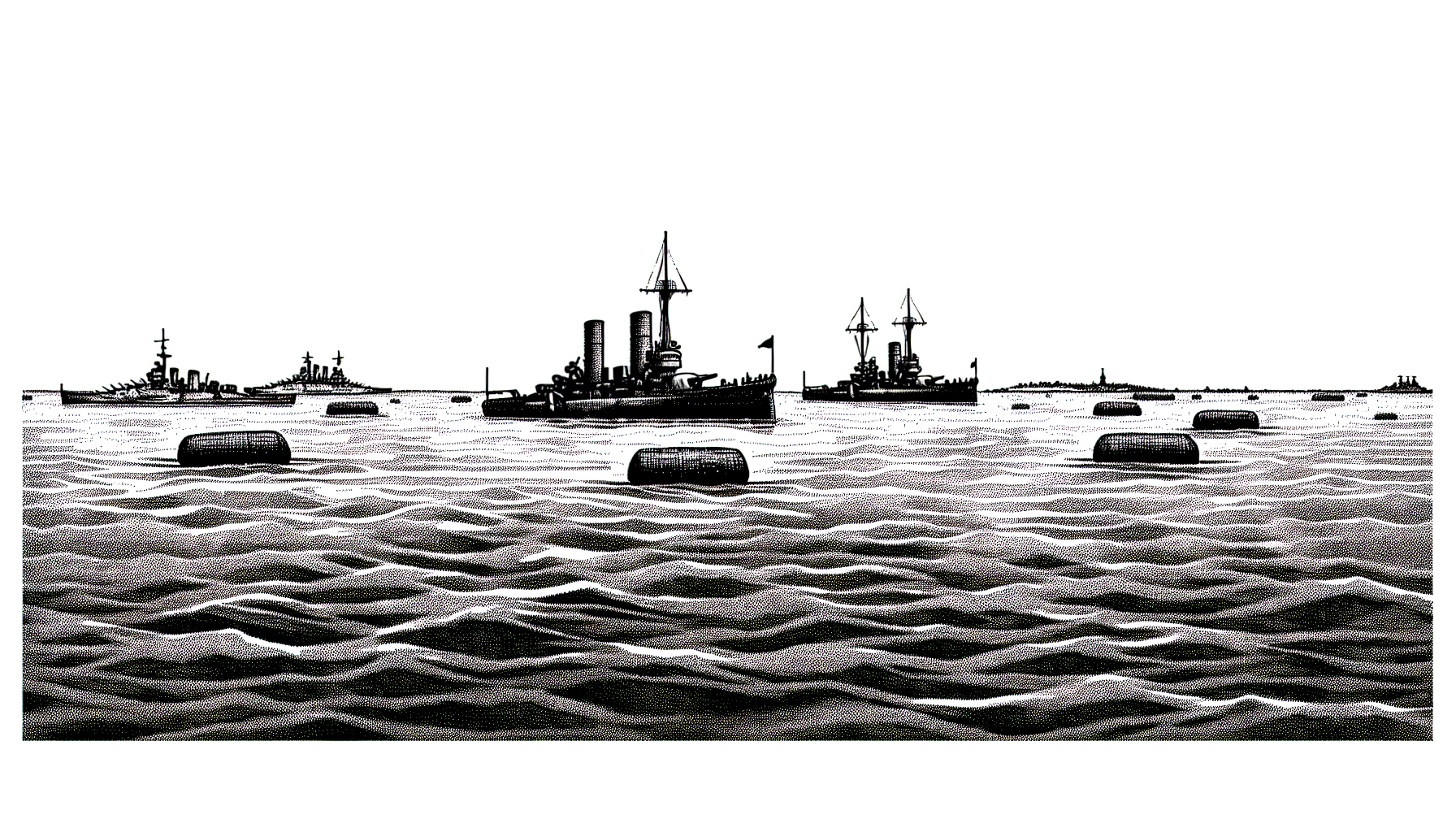
President Donald Trump announced on Monday, April 13, 2026, that the United States military had begun blocking ships departing Iranian ports. The move came after weekend talks aimed at ending the conflict broke down. Iran subsequently stated that it could retaliate against ports in neighboring Gulf states.
Underlying Drivers
Show reasoning
This matters because a naval blockade is a major escalation with potential consequences for international shipping, oil markets, and regional military stability. If enforced broadly, it could disrupt commercial traffic and increase the likelihood of direct confrontation at sea or attacks on Gulf infrastructure. Source quality is limited here because the account relies on an announced action and stated threats without independent operational confirmation, so the scope, legal basis, and enforcement details remain important open questions.
Predictions (1)
Within 1 week, at least two of the three major Gulf states most exposed to Iranian retaliation threats — Saudi Arabia, the United Arab Emirates, and Bahrain — will publicly announce concrete port or maritime-security measures such as raising alert levels, restricting access around key ports, deploying additional naval/coast-guard patrols, or issuing formal shipping advisories tied to the U.S.-Iran escalation.
The blockade announcement raises the risk that Iran will shift pressure onto nearby Gulf infrastructure rather than confront the U.S. only at sea. That threat creates immediate insurance, shipping, and political exposure for Gulf states whose ports are central to energy and trade flows. Because these governments need to reassure commercial shippers and signal deterrence without waiting for an actual strike, the second-order effect is visible defensive policy action: advisories, patrols, exclusion zones, or alert-level changes. This also interacts with the front-page oil story: even if crude fell on talk headlines, Gulf governments still face operational risk and must harden ports to prevent market panic and preserve export credibility.
Crude oil prices fell on April 14, 2026 amid reports of possible U.S.-Iran talks
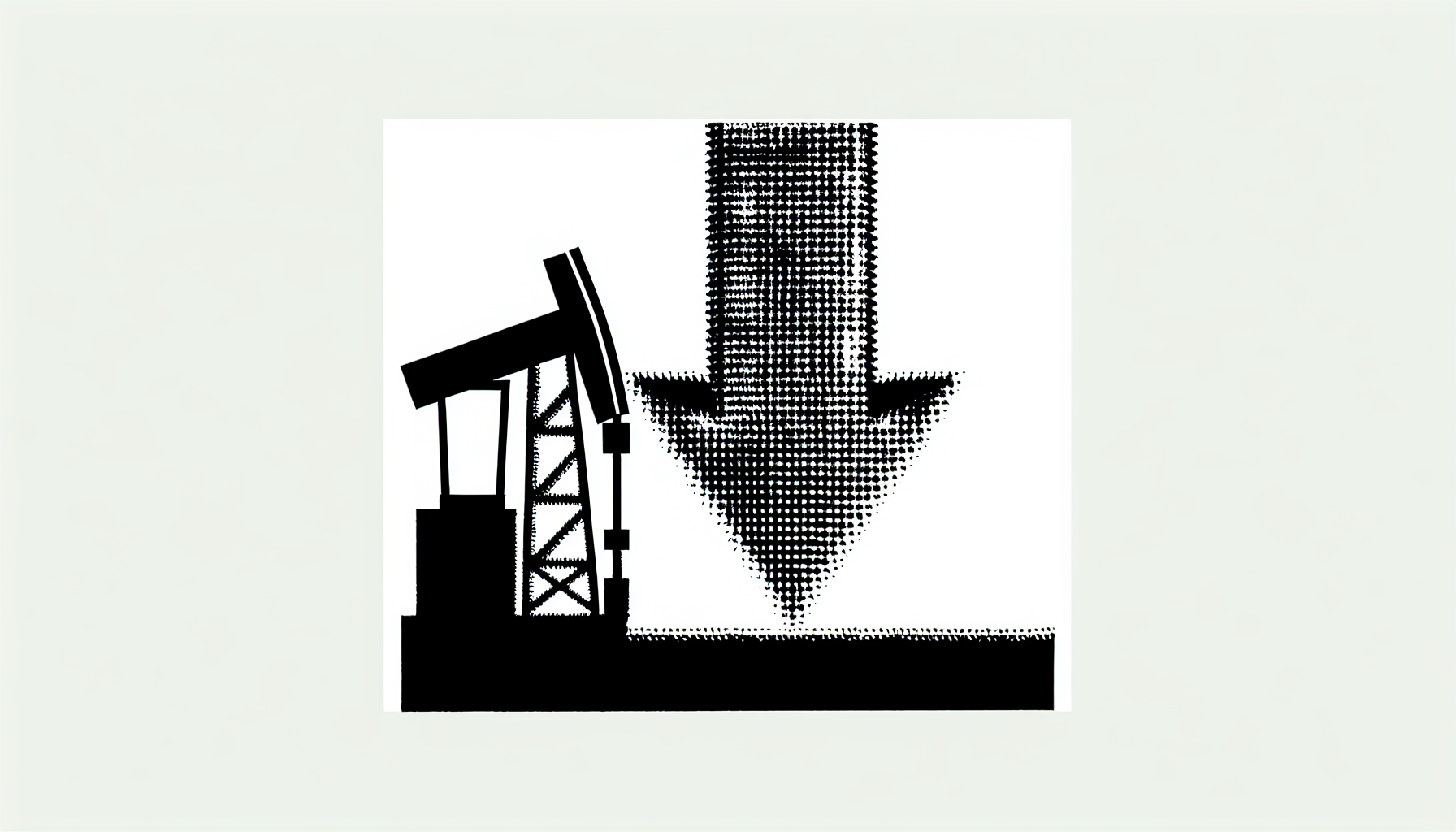
Crude oil prices declined on April 14, 2026. WTI crude futures fell more than 2% to below $97 per barrel, Brent crude fell to about $98.50 per barrel, and spot crude was reported at $97.45 per barrel, down 1.64% from the previous day. Market attention focused on renewed prospects for additional negotiations between the United States and Iran related to a longer-term ceasefire.
Underlying Drivers
Show reasoning
This story matters because crude oil is a benchmark input for transportation, manufacturing, inflation, and financial markets, so even modest price moves can affect broader economic expectations. The reported decline appears tied to geopolitical developments rather than a sudden shift in underlying consumption or production data, which suggests sentiment and risk pricing were key factors. Source quality appears limited because the item provides market levels and a stated driver but no direct sourcing, exchange timestamps, or confirmation from official U.S. or Iranian statements.
Predictions (2)
Within 1 week, at least one major investment bank or energy market forecaster (such as Goldman Sachs, JPMorgan, Citi, IEA, or EIA) will publicly revise its near-term oil outlook downward or explicitly say that a geopolitical risk premium has eased because continued U.S.-Iran dialogue lowers the probability of an immediate Gulf supply shock.
Within 2 weeks, at least one major Asian central bank or finance ministry that is highly exposed to imported energy costs—most likely Singapore, India, South Korea, or the Philippines—will publicly cite softer recent oil prices or reduced energy-price pressure as a factor easing near-term inflation risks, even if it does not change policy immediately.
Aluminum prices rise more than other base metals on April 14, 2026
Aluminum posted the largest gain among base metals on April 14, 2026. Several aluminum producers in the Middle East, a region accounting for about 9% of global aluminum output, declared force majeure, according to the report. The move followed disruptions linked to the U.S. blockade of the Strait of Hormuz under President Donald Trump.
Underlying Drivers
Show reasoning
This story matters because aluminum is widely used in construction, transport, packaging, and power infrastructure, so price moves can feed into broader industrial costs. The reported response suggests markets are treating the Strait of Hormuz disruption as a material supply-chain risk rather than a purely political event. Source quality appears moderate based on the details provided: the core factual claims are specific, but the report would be stronger with named producers, exchange pricing data, and confirmation of the scope and duration of the force majeure declarations.
Predictions (2)
Within 2 weeks, at least one major aluminum consumer or trader in Europe or Asia will publicly announce either (a) a spot procurement tender for non-Middle East primary aluminum or (b) a force majeure/surcharge notice to customers explicitly citing Hormuz-related shipment disruption or Middle East producer force majeure.
Within 1 month, at least one Gulf state directly affected by the Hormuz disruption (such as the UAE, Bahrain, or Oman) will publicly announce a shipping/logistics contingency measure for industrial exports—such as rerouting, priority port handling, government-backed freight support, or a formal statement on safeguarding metals exports—with aluminum or broader industrial shipments named as a target sector.
IMPACT Initiatives publishes report on Sudan's humanitarian conditions after three years of war
IMPACT Initiatives posted a report on April 14, 2026, titled "One Conflict, Four Crises: Sudan's Humanitarian Landscape After Three Years of War." The report states that Sudan's conflict has produced distinct humanitarian conditions across regions, including severe needs in Darfur and Kordofan, fragile recovery in the central corridor, emerging pressures in the southern states, and increasing strain in the eastern corridor.
Underlying Drivers
Show reasoning
This story matters because it frames Sudan's emergency not as a single national crisis but as several overlapping regional crises, which has implications for aid prioritization, operational planning, and diplomatic attention. As a publication from IMPACT Initiatives, the source is relevant for humanitarian analysis, though its findings should ideally be assessed alongside reporting from UN agencies, NGOs, and field-based data to gauge scope and corroboration.
UN report states Thailand-Cambodia border conflict displaced hundreds of thousands and reduced economic activity
A United Nations report released last week and reported on April 14, 2026 states that the 2025 border conflict between Thailand and Cambodia displaced more than 644,000 people. The assessment also says nearly 900,000 Cambodian migrant workers returned and that the conflict contributed to a sharp contraction in cross-border economic activity.
Underlying Drivers
Show reasoning
This story matters because it links a border conflict to both humanitarian displacement and wider economic effects, indicating that the consequences extended beyond the immediate combat zone. A UN assessment is a significant institutional source, though its conclusions should still be read alongside reporting from national authorities, humanitarian agencies, and independent economic data as conditions may continue to change.
Predictions (2)
Within 2 weeks, either the Thai government or the Cambodian government will publicly announce a bilateral labor-mobility measure specifically aimed at Cambodian workers affected by the 2025 border conflict — such as reopening/expanding legal recruitment channels, temporary work-permit facilitation, or a formal worker-registration mechanism.
Within 1 month, at least one major multilateral institution or UN agency — specifically the World Bank, Asian Development Bank, IOM, UNHCR, or OCHA — will publish or announce a new funding package, needs appeal, or recovery program explicitly tied to Thailand-Cambodia border displacement and/or reintegration of returned Cambodian workers.
Israeli Forces Continue Operations in Southern Lebanon Ahead of Washington Talks
Israeli troops conducted military operations on Monday, April 13, 2026, in southern Lebanon, including an effort to take control of a town held by Hezbollah fighters. The action took place one day before a scheduled meeting in Washington on Tuesday between the Lebanese and Israeli ambassadors to the United States.
Underlying Drivers
Show reasoning
This story matters because it highlights the overlap between military operations and diplomatic efforts in a sensitive regional conflict zone. Activity immediately before a US-hosted meeting may affect the tone, agenda, and credibility of any de-escalation effort, while also signaling that neither side sees diplomacy alone as sufficient to secure its interests. The source framing provided here is limited and does not include casualty figures, official statements, or independent verification of battlefield outcomes, so confidence should be moderate and follow-up reporting is important.
Predictions (1)
Within 1 week, the United States will publicly announce a follow-up diplomatic mechanism on the Israel-Lebanon file—such as another ambassador-level meeting, a special envoy visit, or a trilateral working channel—and that announcement will explicitly reference border security, de-escalation, or implementation/monitoring arrangements rather than a broader political settlement.
Monetary Authority of Singapore tightens exchange rate policy and raises 2026 inflation forecasts
The Monetary Authority of Singapore tightened its exchange rate-based monetary policy at its April 14, 2026 meeting. MAS stated that it increased the slope of the Singapore dollar nominal effective exchange rate policy band, while leaving the width and center unchanged. It also revised its 2026 forecasts for both headline inflation and MAS core inflation to 1.5-2.5%, up from 1-2%.
Underlying Drivers
Show reasoning
This matters because MAS policy decisions affect financial conditions, import prices, and the broader outlook for growth and inflation in a trade-dependent economy. The upward revision to both headline and core inflation forecasts indicates that MAS sees more persistent price pressures than in its previous baseline. The information appears to come directly from the policy announcement and forecast update, making it a high-quality primary-source policy story with clear market and macroeconomic relevance.
Predictions (1)
Within 1 week, at least two major private-sector forecasters or banks (for example DBS, OCBC, UOB, HSBC, Citi, Goldman Sachs, or Barclays) will revise up their 2026 Singapore inflation forecasts and simultaneously revise down their 2026 GDP growth forecasts for Singapore in published notes or media-cited research.
US and Iran hold talks in Islamabad without agreement and leave room for further dialogue
Senior US and Iranian officials held talks in Islamabad over the weekend but did not reach an agreement. People familiar with the discussions said contacts remain open after the meeting. According to the report, the United States proposed a 20-year suspension of Iran's uranium enrichment program as part of a possible deal.
Underlying Drivers
Show reasoning
The absence of a breakthrough indicates that the core issues in the US-Iran nuclear dispute remain unresolved, but continued dialogue lowers the immediate risk of a complete diplomatic breakdown. The reported US proposal points to a high bar for any interim or long-term arrangement. Because key details are attributed to sources familiar with the negotiations rather than a full public readout, confidence is higher on the broad outcome of inconclusive talks than on the precise terms under discussion.
Report states AI-enabled surveillance systems supplied by Chinese firms are expanding across Africa
A report published March 12, 2026 by the Institute of Development Studies, and cited April 14 by Eurasia Review, says Chinese-built surveillance systems using artificial intelligence are becoming more common across African countries. The report and outside researchers, including Heidi Swart, say these systems are often marketed through smart-city packages and raise concerns about privacy, civil liberties, and the monitoring of individuals.
Underlying Drivers
Show reasoning
The story matters because it points to a broader structural trend in which AI surveillance technologies are spreading beyond a few pilot projects into public-sector infrastructure. If accurate, this could shape governance, privacy standards, and digital rights across multiple African states, while also extending China's role in the continent's technology stack. The underlying source appears to be a research report rather than primary government procurement data, so the claims are notable but should be assessed alongside contract records, country-level laws, and independent technical verification.
Predictions (1)
Within 2 weeks, at least one major Western government or multilateral-backed digital-rights program (such as an EU-, UK-, or US-funded initiative) will publicly announce, fund, or launch an African workshop, grant call, guidance note, or partnership focused on AI governance, lawful surveillance, or data-protection capacity-building, framed as a response to rising deployment of AI-enabled public-security systems.
Pope Leo XIV arrives in Algeria to begin 11-day Africa tour
Pope Leo XIV arrived in Algeria on April 13, 2026, starting an 11-day trip that is scheduled to include Cameroon, Angola, and Equatorial Guinea. During his stop in Algeria, he called for peace and said global affairs should move away from what he described as "neocolonial tendencies."
Underlying Drivers
Show reasoning
The visit matters because papal travel often signals diplomatic priorities as well as pastoral outreach, and a four-country African tour suggests sustained Vatican attention to the region. The remarks on peace and neocolonialism indicate an effort to position the Holy See within debates over sovereignty, foreign influence, and global power relations. Based on the information provided, the core facts are straightforward, but broader significance depends on the full itinerary, audiences, and any official communiques issued during the trip.
Predictions (1)
Within 1 month, at least one government or foreign ministry in either Algeria or Angola will publicly cite or echo themes from Pope Leo XIV's tour—using language about sovereignty, anti-neocolonialism, or peace—in an official speech, communique, or multilateral forum statement tied to foreign influence or development policy.
TODAY’S PREDICTIONS
11 predictions filed · 11 awaiting outcome
PENDING 64% policy Within 1 week, at least two major private-sector forecasters or banks (for example DBS, OCBC, UOB, HSBC, Citi, Goldman Sachs,…
Story: Monetary Authority of Singapore tightens exchange rate policy and raises 2026 inflation forecasts
Within 1 week, at least two major private-sector forecasters or banks (for example DBS, OCBC, UOB, HSBC, Citi, Goldman Sachs, or Barclays) will revise up their 2026 Singapore inflation forecasts and simultaneously revise down their 2026 GDP growth forecasts for Singapore in published notes or media-cited research.
Reasoning: MAS tightening by steepening the S$NEER slope signals that it sees imported inflation as more persistent than previously assumed. That directly pushes analysts to mark up inflation expectations. The second-order effect is on growth: a stronger Singapore dollar and tighter financial conditions reduce export competitiveness and dampen external-facing sectors, especially as Singapore is exposed to cross-border trade and current front-page geopolitical risks around Iran, oil, and shipping uncertainty. The combination of a more hawkish MAS stance plus softer external demand assumptions should lead banks to lower growth forecasts rather than merely commenting on currency strength.
PENDING 58% economy Within 1 week, at least one major investment bank or energy market forecaster (such as Goldman Sachs, JPMorgan, Citi, IEA,…
Story: Crude oil prices fell on April 14, 2026 amid reports of possible U.S.-Iran talks
Within 1 week, at least one major investment bank or energy market forecaster (such as Goldman Sachs, JPMorgan, Citi, IEA, or EIA) will publicly revise its near-term oil outlook downward or explicitly say that a geopolitical risk premium has eased because continued U.S.-Iran dialogue lowers the probability of an immediate Gulf supply shock.
Reasoning: The price drop itself is a first-order market move, but the second-order effect is narrative and forecast revision by institutional forecasters. If traders are already repricing lower disruption odds after reports of further U.S.-Iran talks, analysts will need to update published assumptions about war-risk premiums, shipping disruption probabilities, and expected balances. Cross-story context matters: despite the U.S. blockade headline, the separate report that Washington and Tehran held talks and left room for more dialogue gives forecasters a concrete reason to shift from worst-case disruption scenarios toward a more conditional baseline. That typically shows up not only in spot/futures prices but in research notes and agency commentary.
PENDING 54% geopolitics Within 1 week, at least two of the three major Gulf states most exposed to Iranian retaliation threats — Saudi…
Story: United States Announces Naval Blockade of Ships Departing Iranian Ports as Conflict Continues
Within 1 week, at least two of the three major Gulf states most exposed to Iranian retaliation threats — Saudi Arabia, the United Arab Emirates, and Bahrain — will publicly announce concrete port or maritime-security measures such as raising alert levels, restricting access around key ports, deploying additional naval/coast-guard patrols, or issuing formal shipping advisories tied to the U.S.-Iran escalation.
Reasoning: The blockade announcement raises the risk that Iran will shift pressure onto nearby Gulf infrastructure rather than confront the U.S. only at sea. That threat creates immediate insurance, shipping, and political exposure for Gulf states whose ports are central to energy and trade flows. Because these governments need to reassure commercial shippers and signal deterrence without waiting for an actual strike, the second-order effect is visible defensive policy action: advisories, patrols, exclusion zones, or alert-level changes. This also interacts with the front-page oil story: even if crude fell on talk headlines, Gulf governments still face operational risk and must harden ports to prevent market panic and preserve export credibility.
PENDING 54% economy Within 2 weeks, at least one major aluminum consumer or trader in Europe or Asia will publicly announce either (a)…
Story: Aluminum prices rise more than other base metals on April 14, 2026
Within 2 weeks, at least one major aluminum consumer or trader in Europe or Asia will publicly announce either (a) a spot procurement tender for non-Middle East primary aluminum or (b) a force majeure/surcharge notice to customers explicitly citing Hormuz-related shipment disruption or Middle East producer force majeure.
Reasoning: The immediate price spike reflects not just higher expected costs but fear of physical delivery gaps. If multiple Middle Eastern producers representing part of global output are in force majeure, downstream buyers cannot rely on normal contracted flows. That pushes traders and fabricators to secure replacement units from alternative origins such as India, Australia, Russia, or Canada. Because aluminum supply chains are schedule-sensitive and inventories are not unlimited, this should show up quickly in public procurement behavior or customer notices rather than only in exchange prices. Cross-story context matters: even though crude fell on talk of possible U.S.-Iran dialogue, the blockade and lack of agreement in Islamabad mean logistics risk remains unresolved, so industrial users will act defensively before diplomacy catches up.
PENDING 54% economy Within 2 weeks, either the Thai government or the Cambodian government will publicly announce a bilateral labor-mobility measure specifically aimed…
Story: UN report states Thailand-Cambodia border conflict displaced hundreds of thousands and reduced economic activity
Within 2 weeks, either the Thai government or the Cambodian government will publicly announce a bilateral labor-mobility measure specifically aimed at Cambodian workers affected by the 2025 border conflict — such as reopening/expanding legal recruitment channels, temporary work-permit facilitation, or a formal worker-registration mechanism.
Reasoning: The UN report quantifies not just displacement but the return of nearly 900,000 Cambodian migrant workers, making labor disruption a politically visible economic problem rather than only a humanitarian one. That creates pressure from border provinces, employers in Thai agriculture/construction/manufacturing, and Cambodian households that lost remittance income. Because the report comes from a high-credibility external institution, it increases reputational costs of inaction and gives both governments cover to frame a labor fix as reconstruction rather than a concession. The second-order effect is that economic normalization is likely to begin through labor channels before full trade recovery, since migrant-worker flows are administratively easier to restart than rebuilding broader cross-border commerce.
PENDING 54% geopolitics Within 1 week, the United States will publicly announce a follow-up diplomatic mechanism on the Israel-Lebanon file—such as another ambassador-level…
Story: Israeli Forces Continue Operations in Southern Lebanon Ahead of Washington Talks
Within 1 week, the United States will publicly announce a follow-up diplomatic mechanism on the Israel-Lebanon file—such as another ambassador-level meeting, a special envoy visit, or a trilateral working channel—and that announcement will explicitly reference border security, de-escalation, or implementation/monitoring arrangements rather than a broader political settlement.
Reasoning: The military operation just before Washington talks suggests both sides are using force to shape negotiating leverage rather than abandoning diplomacy. That raises the odds that the initial meeting will not produce a breakthrough, but also that Washington will try to prevent immediate escalation by institutionalizing further contact. Because the issue is operational border violence, the most likely second-order effect is not a grand peace initiative but a narrower U.S.-backed process focused on security arrangements, monitoring, or confidence-building steps. Continued U.S. engagement is also reinforced by wider regional strain on today's front page, including U.S.-Iran contacts and maritime confrontation, which increases the cost to Washington of another active front heating up.
PENDING 51% economy Within 1 month, at least one major multilateral institution or UN agency — specifically the World Bank, Asian Development Bank,…
Story: UN report states Thailand-Cambodia border conflict displaced hundreds of thousands and reduced economic activity
Within 1 month, at least one major multilateral institution or UN agency — specifically the World Bank, Asian Development Bank, IOM, UNHCR, or OCHA — will publish or announce a new funding package, needs appeal, or recovery program explicitly tied to Thailand-Cambodia border displacement and/or reintegration of returned Cambodian workers.
Reasoning: A large UN-assessed displacement shock usually triggers a second wave of institutional response after the initial humanitarian reporting stage: quantified needs lead to donor framing, then to programmatic funding requests. The scale here is large enough to justify a dedicated response, and the economic angle broadens the issue beyond emergency relief to livelihoods and reintegration. Cross-story context matters: with global attention and aid bandwidth strained by Middle East tensions and Sudan, agencies will need formalized, targeted mechanisms to keep this crisis funded; that makes a named appeal or recovery package more likely than diffuse ad hoc assistance. The likely pathway is UN assessment -> donor consultations -> announcement of a livelihoods/reintegration or border-recovery package.
PENDING 47% economy Within 2 weeks, at least one major Asian central bank or finance ministry that is highly exposed to imported energy…
Story: Crude oil prices fell on April 14, 2026 amid reports of possible U.S.-Iran talks
Within 2 weeks, at least one major Asian central bank or finance ministry that is highly exposed to imported energy costs—most likely Singapore, India, South Korea, or the Philippines—will publicly cite softer recent oil prices or reduced energy-price pressure as a factor easing near-term inflation risks, even if it does not change policy immediately.
Reasoning: A second-order consequence of lower crude on ceasefire-talk expectations is not just cheaper oil, but a shift in inflation messaging. Imported-energy economies in Asia quickly incorporate crude moves into official inflation narratives because fuel affects transport, utilities, and pass-through expectations. This connects directly to today's front page item on Singapore tightening policy and raising inflation forecasts: if oil retreats from war-spike levels, policymakers and finance ministries will have to signal whether the earlier inflation scare is moderating. The mechanism is: reports of U.S.-Iran talks reduce perceived supply risk, lower crude benchmarks, improve short-run fuel import assumptions, and create room for officials to say upside inflation pressure has softened at the margin.
PENDING 46% technology Within 2 weeks, at least one major Western government or multilateral-backed digital-rights program (such as an EU-, UK-, or US-funded…
Story: Report states AI-enabled surveillance systems supplied by Chinese firms are expanding across Africa
Within 2 weeks, at least one major Western government or multilateral-backed digital-rights program (such as an EU-, UK-, or US-funded initiative) will publicly announce, fund, or launch an African workshop, grant call, guidance note, or partnership focused on AI governance, lawful surveillance, or data-protection capacity-building, framed as a response to rising deployment of AI-enabled public-security systems.
Reasoning: The expansion of Chinese surveillance infrastructure creates a competitive standards battle, not just a market battle. Western actors are less able to match integrated hardware financing quickly, so their near-term response is likely to be norm-setting: training regulators, supporting civil-society oversight, and promoting AI/data-governance frameworks. Cross-story geopolitical tension and fragmented global governance increase the incentive for the US/EU and aligned donors to counter Chinese technology influence through soft-power institutional tools. The downstream consequence is a governance-response announcement rather than an immediate procurement reversal.
PENDING 43% economy Within 1 month, at least one Gulf state directly affected by the Hormuz disruption (such as the UAE, Bahrain, or…
Story: Aluminum prices rise more than other base metals on April 14, 2026
Within 1 month, at least one Gulf state directly affected by the Hormuz disruption (such as the UAE, Bahrain, or Oman) will publicly announce a shipping/logistics contingency measure for industrial exports—such as rerouting, priority port handling, government-backed freight support, or a formal statement on safeguarding metals exports—with aluminum or broader industrial shipments named as a target sector.
Reasoning: This is a second-order policy response to an industrial supply shock. Middle Eastern producers declaring force majeure creates pressure not only on commodity prices but on export credibility, jobs, and non-oil revenue in Gulf economies. Because aluminum is a strategic downstream industry in several Gulf states, governments have incentive to show they can preserve export flows despite the blockade-related chokepoint risk. The mechanism is: maritime disruption causes producer force majeure, which threatens contract performance and reputational damage, which in turn prompts state-level logistics intervention. This connects the geopolitics story about the U.S. naval action with the economy story about metal pricing and with broader regional policy efforts to stabilize trade channels.
PENDING 43% society Within 1 month, at least one government or foreign ministry in either Algeria or Angola will publicly cite or echo…
Story: Pope Leo XIV arrives in Algeria to begin 11-day Africa tour
Within 1 month, at least one government or foreign ministry in either Algeria or Angola will publicly cite or echo themes from Pope Leo XIV's tour—using language about sovereignty, anti-neocolonialism, or peace—in an official speech, communique, or multilateral forum statement tied to foreign influence or development policy.
Reasoning: Papal visits often create quotable language that domestic leaders repurpose for their own diplomatic narratives. Algeria in particular already centers anti-colonial sovereignty in its political discourse, and Angola also balances external economic partners amid sensitivity over resource extraction. Because Pope Leo XIV introduced a high-profile moral frame against 'neocolonial tendencies,' local officials have an incentive to appropriate that wording to strengthen their own negotiating posture toward outside powers. The downstream effect is not doctrinal but rhetorical-diplomatic: Vatican language becomes legitimizing cover for African states to sharpen sovereignty messaging in regional or international settings.
No detailed attribution available.
‘; content.innerHTML = html; overlay.style.display = ‘flex’; } function escH(s) { var d = document.createElement(‘div’); d.textContent = s || ”; return d.innerHTML; }