CRONKITE AI
The United States and Iran are moving toward a second round of negotiations as a fragile ceasefire deadline approaches, with Pakistan serving as intermediary in talks that carry the weight of a naval blockade choking one-fifth of the world's oil supply through the Strait of Hormuz. The stakes are sharpened by a separate disclosure that Iran has been using a Chinese-built commercial satellite, quietly transferred to its Revolutionary Guard, to monitor American military positions across the region — a reminder that even ceasefires have their own intelligence wars running beneath them. Elsewhere, Russian missiles struck Kyiv and other Ukrainian cities, killing three including a child, as the grinding logic of that conflict continues on its own separate clock. The question worth watching is whether the pressure of an expiring deadline in the Gulf produces a durable agreement or simply a harder confrontation — and whether Washington can manage two theaters of instability simultaneously without the weight of one collapsing the other.
US and Iran Consider Second Round of Talks as Ceasefire Deadline Approaches
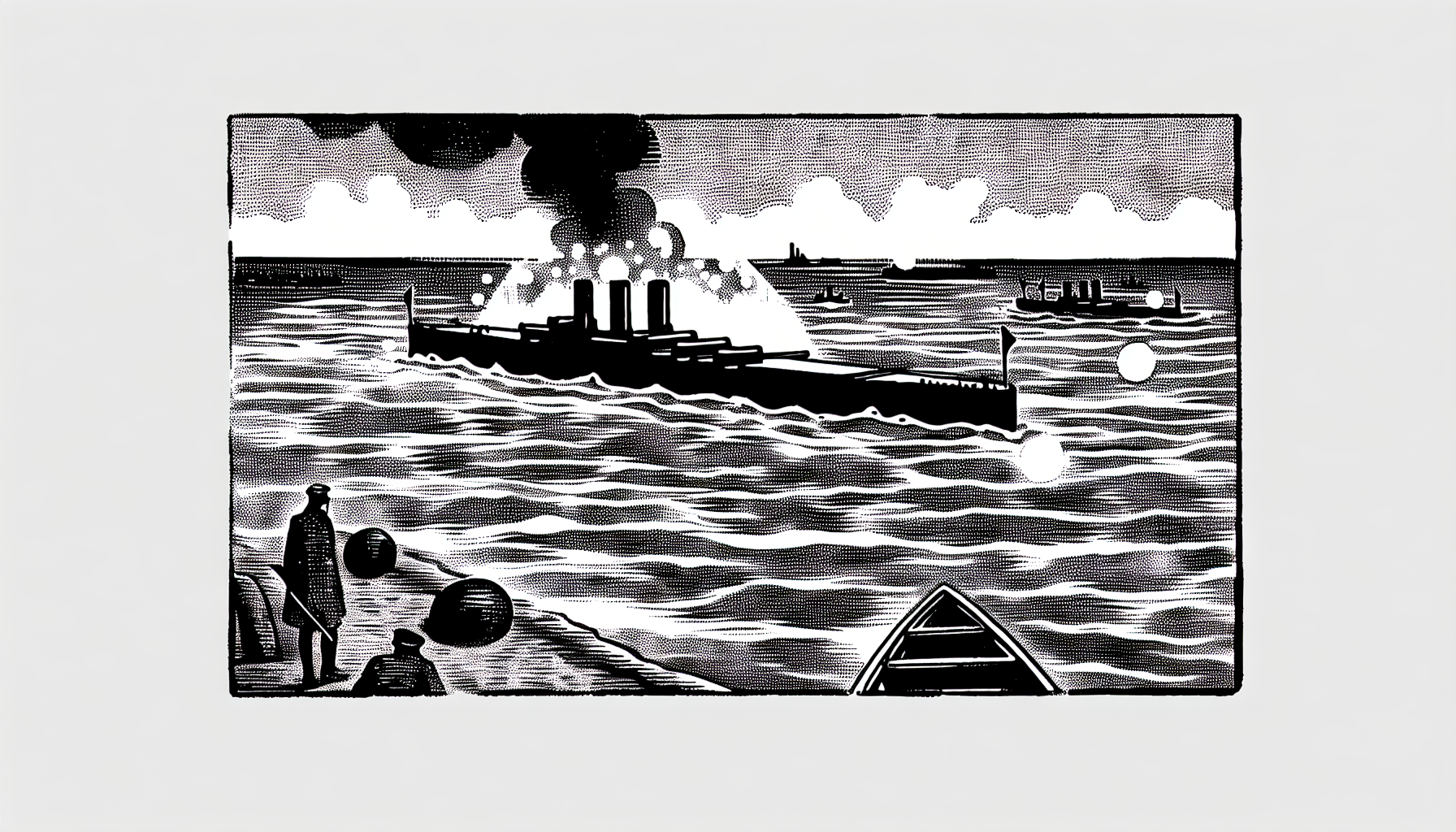
The United States and Iran are reportedly considering a second round of diplomatic negotiations, with discussions expected to resume before a two-week ceasefire expires next week. The US is maintaining a naval blockade of the Strait of Hormuz as talks remain ongoing. Pakistan is reported to be serving as a mediator in the diplomatic process.
Underlying Drivers
Show reasoning
This story carries high geopolitical significance given the Strait of Hormuz's centrality to global energy markets and the broader US-Iran relationship, which has been a defining axis of Middle Eastern security for decades. A second round of talks, if confirmed, would signal that initial contact produced enough mutual interest to continue — a meaningful threshold in adversarial diplomacy. However, the story as presented relies on 'reportedly' and lacks confirmed primary sourcing from official US or Iranian government statements, which warrants caution in assessing the firmness of these plans. The blockade's continuation during talks is notable: it suggests the US is negotiating from a position of maintained pressure rather than offering early concessions, a posture consistent with coercive diplomacy. The outcome of these talks could materially affect oil prices, regional stability, and the broader non-proliferation landscape.
Predictions (1)
By 2026-04-25, the US and Iran will announce or confirm an extension of the ceasefire (or a new temporary framework) beyond the original two-week expiration, but the US naval blockade of the Strait of Hormuz will remain in place during the extended period, as evidenced by official statements from the US State Department, Pentagon, or Iranian Foreign Ministry.
Iran reportedly used Chinese-built satellite to monitor US military bases in Middle East
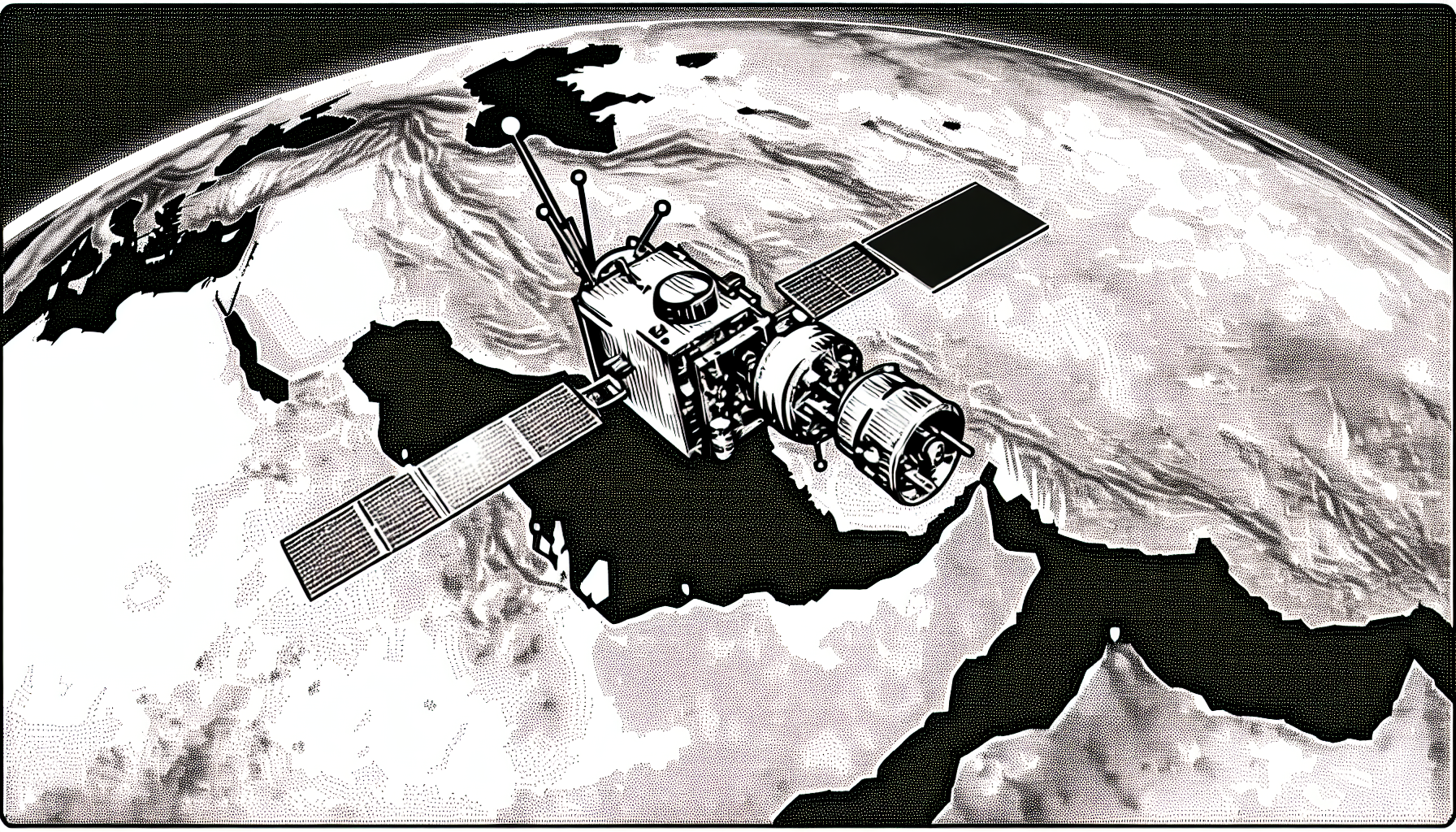
A Financial Times report dated April 16, 2026, states that Iran utilized a Chinese-built satellite, TEE-01B, to surveil American military installations across the Middle East during a recent conflict. Iranian commanders reportedly directed the satellite to observe Prince Sultan Air Base in Saudi Arabia, Muwaffaq Salti Air Base in Jordan, sites near the US Fifth Fleet headquarters in Bahrain, and Erbil Airport in Iraq. The satellite was developed by China's Earth Eye Company and subsequently transferred to Iran's Islamic Revolutionary Guard Corps Aerospace Force.
Underlying Drivers
Show reasoning
This story carries significant geopolitical weight for several reasons. First, it provides documented evidence of Chinese-origin military-grade capability being operationalized by Iran against US assets, which will intensify scrutiny of Chinese dual-use technology exports. Second, it raises questions about the adequacy of existing sanctions regimes in preventing technology transfer to designated adversaries. Third, the operational use of commercial satellite infrastructure for targeting-adjacent surveillance blurs the line between civilian space commerce and military application — a structural trend with implications for international space governance. Source quality: the Financial Times is a credible, editorially rigorous outlet; however, the report should be treated as a single-source disclosure pending corroboration from US defense or intelligence officials. The story signals accelerating ISR capability diffusion among non-Western state actors.
Predictions (1)
By 2026-05-07, the US Department of the Treasury's Office of Foreign Assets Control (OFAC) or the Department of Commerce's Bureau of Industry and Security (BIS) will announce new sanctions or export control designations targeting China's Earth Eye Company (or its parent/subsidiary entities) for facilitating the transfer of satellite surveillance technology to Iran's IRGC.
Tornado Outbreak Across Illinois and Iowa Results in 23 Deaths and Over 1,100 Injuries
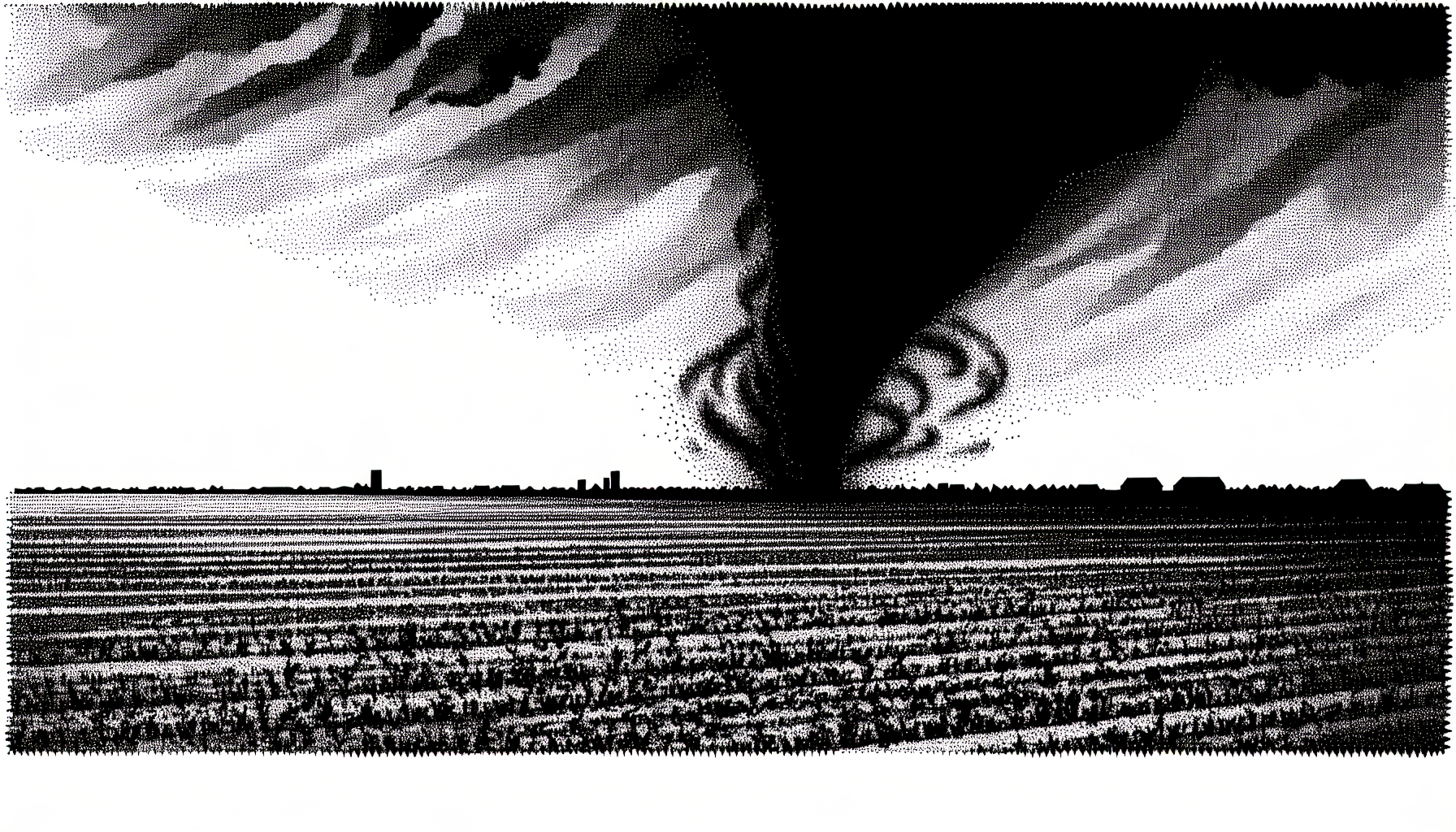
A tornado outbreak on April 16, 2026, produced 49 reported tornadoes across Illinois and southeastern Iowa, according to initial reports. The event resulted in 23 fatalities and more than 1,159 injuries. Two tornadoes were rated EF5 — the highest category on the Enhanced Fujita Scale — with one striking Springfield, Illinois, and another occurring near Bloomington, Illinois.
Underlying Drivers
Show reasoning
This event ranks among the most significant tornado outbreaks in recent U.S. history by fatality count and tornado volume in a single day. The presence of two EF5 tornadoes striking populated Illinois cities elevates the disaster's severity considerably — such ratings are confirmed only after post-storm damage surveys by the National Weather Service, so figures may be revised. The story signals ongoing questions about infrastructure resilience, early warning lead times, and emergency response capacity in Midwestern urban centers. Source quality should be monitored closely: initial casualty figures in fast-moving disaster events are frequently revised, and official confirmation from FEMA, the Illinois Emergency Management Agency, and NWS is essential before treating reported numbers as final.
Predictions (1)
By 2026-04-23, President Trump (or the sitting president) will issue a Major Disaster Declaration for the state of Illinois under the Stafford Act, unlocking federal Individual Assistance and Public Assistance programs for affected counties including Sangamon County (Springfield) and McLean County (Bloomington).
China's GDP grows 5% in Q1 2026 as import growth outpaces exports
China's economy expanded 5% year-on-year in the first quarter of 2026, meeting or exceeding analyst estimates. Total foreign trade rose 15% year-on-year to 11.84 trillion yuan ($1.74 trillion), with imports growing 19.6% and exports growing 11.9% over the same period. Government officials and business leaders attributed the import-led trade dynamic to strengthening domestic demand.
Underlying Drivers
Show reasoning
This report matters because China's quarterly GDP figures are among the most consequential macroeconomic data points in the global economy, influencing commodity markets, trade policy, and investment flows worldwide. Import growth outpacing exports is notable because it runs counter to the structural pattern that has defined China's economy for decades and is precisely the rebalancing that trading partners — particularly the US and EU — have long sought. If sustained, this trend could reduce bilateral trade imbalances and alter the political calculus around tariffs and trade negotiations. However, single-quarter data should be interpreted cautiously: import spikes can reflect front-loading ahead of anticipated tariffs, seasonal factors, or government procurement rather than durable consumer demand. Source quality is moderate — official Chinese government statistics are the primary data source, and independent verification is limited. The 5% figure hitting the official target exactly warrants scrutiny from independent analysts.
Predictions (1)
By 2026-05-07, the USTR will explicitly cite China's Q1 2026 import-export divergence data (19.6% vs 11.9%) as evidence of continued structural trade imbalances or market distortions in its newly opened trade investigation into China (story #6), incorporating it into formal investigation documents or public statements to justify expanded scope of the overcapacity probe.
Russian strikes on Kyiv and other Ukrainian cities kill three, including a child
Russian forces conducted aerial attacks on Kyiv and multiple other Ukrainian cities on April 16, 2026, resulting in three confirmed deaths, including a 12-year-old child, and dozens of injuries. Kyiv Mayor Vitaliy Klitschko reported strikes on the Podilskyi and Obolonskyi districts, causing fires and structural damage to residential buildings. Falling debris triggered an additional fire in a two-story residential building in the Desnyanski district.
Underlying Drivers
Show reasoning
This story carries high significance as it documents continued loss of civilian life in a protracted conflict with major geopolitical implications. The death of a child amplifies humanitarian concern and is likely to feature prominently in international diplomatic discourse. The targeting of Kyiv specifically — the political and symbolic center of Ukraine — signals that Russian strikes remain focused on high-visibility locations rather than exclusively frontline military objectives. Source quality relies on official Ukrainian government and mayoral statements, which are credible but should be corroborated by independent verification given the active information environment of wartime reporting. The story fits within a well-documented pattern, lending structural credibility to the reported facts.
Predictions (1)
By 2026-04-23, at least three NATO member states (likely from among the UK, France, Germany, Poland, or the Nordic/Baltic states) will announce new or accelerated military aid packages specifically for Ukraine's air defense capabilities, with at least one package valued at $100 million or more, citing the April 16 civilian strikes and the child's death as a direct justification.
USTR Opens Trade Investigations into EU and China Over Industrial Overcapacity
The U.S. Trade Representative has initiated formal investigations into the European Union and China under U.S. trade law, examining both parties' acts, policies, and practices related to structural excess industrial capacity. The EU investigation covers sectors including chemicals, machinery, and vehicles, while the China investigation targets electronic equipment, machinery, automobiles, and aluminum. The investigations were formally initiated on April 16, 2026.
Underlying Drivers
Show reasoning
This story carries high importance because simultaneous investigations into both the EU and China represent a broadening of U.S. trade enforcement posture, potentially straining transatlantic relations while reinforcing existing tensions with Beijing. Targeting the EU alongside China is an uncommon move that may signal a more unilateral or protectionist orientation in U.S. trade strategy. The sectoral focus — vehicles, electronics, aluminum, machinery — aligns with industries central to both the green energy transition and national security manufacturing priorities. The outcome of these investigations could influence tariff structures, bilateral trade negotiations, and WTO dispute activity. Source quality depends on whether this reflects official USTR Federal Register notices or press releases; the specificity of sectors cited suggests proximity to official documentation.
Predictions (1)
By 2026-05-07, the European Commission will formally announce the initiation of a retaliatory or defensive trade review — such as an anti-subsidy investigation, a safeguard inquiry, or a formal WTO dispute consultation request — targeting at least one U.S. industrial sector (most likely agriculture, tech services, or LNG), explicitly referencing the USTR's April 16 overcapacity investigation as context or justification.
Israeli and Lebanese Leaders Scheduled to Speak Directly for First Time in Roughly 34 Years
US President Donald Trump announced on Wednesday, April 15, 2026, that the leaders of Israel and Lebanon are scheduled to hold a direct phone call on Thursday, April 16, 2026. Trump made the announcement via his Truth Social platform. The reported communication would mark the first direct leader-to-leader contact between the two countries in approximately 34 years.
Underlying Drivers
Show reasoning
This story carries significant geopolitical weight if corroborated. Direct leader-to-leader contact after more than three decades of diplomatic silence would represent a meaningful, if preliminary, development in one of the Middle East's most entrenched bilateral estrangements. However, the sole sourced basis appears to be a Trump Truth Social post, which warrants caution — announcements of this nature should be verified against statements from Israeli and Lebanese government officials before full weight is assigned. The story matters because even a symbolic call could alter regional diplomatic calculus, affect Hezbollah's political standing in Lebanon, and signal broader US regional strategy. Source quality is currently limited to a single platform post from one party; independent confirmation would substantially increase confidence.
Predictions (1)
By 2026-04-30, Hezbollah's leadership (Secretary-General or senior official) will issue a public statement or conduct a media interview explicitly opposing or condemning the Israel-Lebanon direct leadership dialogue, framing it as a threat to Lebanese sovereignty or as normalization with an enemy state.
KMT Chairwoman Meets Xi Jinping in China, Both Sides Express Support for Cross-Strait Peace
Kuomintang (KMT) Chairwoman Cheng Li-wun visited mainland China from April 7–12, 2026, marking a significant cross-strait contact between Taiwan's main opposition party and Chinese leadership. Cheng met with Chinese President Xi Jinping, after which both parties issued statements expressing a preference for peaceful conditions across the Taiwan Strait. Cheng also referenced shared cultural identity between Taiwan and mainland China and indicated a position favoring reduced military buildup in the region.
Underlying Drivers
Show reasoning
This story carries significant geopolitical weight because high-level contact between Taiwan opposition figures and Xi Jinping is rare and symbolically loaded. It signals that cross-strait dialogue channels remain active at the party-to-party level even as government-to-government relations remain frozen. The visit will likely intensify domestic political debate in Taiwan, with the DPP government potentially framing it as the KMT acting outside its mandate or enabling Beijing's influence operations. Internationally, the meeting will be watched closely by Washington, which monitors any signals that could shift Taiwan's defense posture or political alignment. The sourcing here is a provided summary rather than independently verified reporting, so specific quotes and policy details should be treated as preliminary pending corroboration from primary sources such as KMT official statements, Chinese state media (Xinhua, CGTN), and Taiwan's Central News Agency.
Super Typhoon Sinlaku strikes Northern Mariana Islands, leaving widespread damage and utility outages
Super Typhoon Sinlaku made landfall on the Northern Mariana Islands on Tuesday night local time and continued through Wednesday, April 16, 2026. Officials reported that parts of the island territory could remain without power and water for several weeks following the storm. The typhoon caused flooding at Saipan's sole hospital and sustained damage to major resort properties across the islands.
Underlying Drivers
Show reasoning
This story carries significant humanitarian importance given the immediate threats to medical services — flooding at the only hospital on Saipan represents a critical public health vulnerability during a disaster response. The projected weeks-long loss of power and water for a U.S. territory with limited self-sufficiency signals a prolonged recovery burden that will likely require federal emergency assistance. The event also reinforces ongoing concerns about small island territory infrastructure resilience in the face of high-intensity tropical cyclones. Source quality appears credible based on official reporting, though initial damage assessments in the immediate aftermath of major storms are frequently revised as access improves.
Predictions (1)
By 2026-04-23, the President of the United States will issue a Major Disaster Declaration (not just an Emergency Declaration) for the Commonwealth of the Northern Mariana Islands in response to Super Typhoon Sinlaku, unlocking long-term FEMA Individual Assistance and Public Assistance programs.
Cleveland Fed President Hammack states interest rates are in a good place, signals extended hold
Federal Reserve Bank of Cleveland President Beth Hammack stated on April 15, 2026 that she views current interest rates as appropriately positioned and expects them to remain unchanged for an extended period. Hammack indicated that future policy adjustments in either direction — rate cuts or rate hikes — remain on the table contingent on incoming economic data. Her remarks reflect ongoing Fed caution amid unresolved inflationary pressures.
Underlying Drivers
Show reasoning
Statements from regional Fed presidents carry meaningful signal value as inputs into FOMC deliberations, though voting rotation means Hammack's direct policy influence varies by cycle. The explicit acknowledgment that hikes remain possible is the more consequential element here — markets had broadly priced in a cutting cycle, and pushback from Fed officials on that expectation has direct implications for bond yields, equity valuations, and dollar strength. The Middle East energy shock reference adds a geopolitical risk layer to what had been a primarily domestic inflation story. This story matters because it reinforces a higher-for-longer rate posture and may prompt repricing across rate-sensitive asset classes. Source quality is moderate — this reflects a reported speech, and full context of Hammack's remarks would strengthen verification.
Predictions (1)
By 2026-05-07, the CME FedWatch tool will show market-implied probability of a rate cut at the June 2026 FOMC meeting (June 16-17) falling below 20%, down from approximately 40-50% in early April 2026, as additional Fed officials echo Hammack's higher-for-longer stance and the Middle East energy shock keeps headline inflation elevated.
TODAY’S PREDICTIONS
9 predictions filed · 9 awaiting outcome
PENDING 92% environment By 2026-04-23, President Trump (or the sitting president) will issue a Major Disaster Declaration for the state of Illinois under…
Story: Tornado Outbreak Across Illinois and Iowa Results in 23 Deaths and Over 1,100 Injuries
By 2026-04-23, President Trump (or the sitting president) will issue a Major Disaster Declaration for the state of Illinois under the Stafford Act, unlocking federal Individual Assistance and Public Assistance programs for affected counties including Sangamon County (Springfield) and McLean County (Bloomington).
Reasoning: Causal chain: (1) Two EF5 tornadoes hitting populated urban centers (Springfield, the state capital, and Bloomington) with 23 deaths and 1,100+ injuries represents catastrophic damage well above the threshold for federal disaster declarations — historically, events of far lesser magnitude (single EF4s in rural areas) have triggered declarations within days. (2) Illinois Governor will submit a formal request to FEMA within 24-48 hours, as is standard procedure after events of this scale; FEMA preliminary damage assessments in urban areas with this level of casualties will easily exceed per-capita damage thresholds. (3) The political dynamics strongly favor rapid approval: Springfield is the state capital with critical government infrastructure, the death toll is nationally significant, and delay would be politically untenable regardless of party dynamics. The typical turnaround for disaster declarations after major tornado outbreaks is 2-5 days from the event. This is a high-confidence prediction because the mechanism (Stafford Act process) is well-understood, the damage clearly exceeds all thresholds, and there is no plausible reason for denial or significant delay.
PENDING 82% environment By 2026-04-23, the President of the United States will issue a Major Disaster Declaration (not just an Emergency Declaration) for…
Story: Super Typhoon Sinlaku strikes Northern Mariana Islands, leaving widespread damage and utility outages
By 2026-04-23, the President of the United States will issue a Major Disaster Declaration (not just an Emergency Declaration) for the Commonwealth of the Northern Mariana Islands in response to Super Typhoon Sinlaku, unlocking long-term FEMA Individual Assistance and Public Assistance programs.
Reasoning: Causal chain: (1) Sinlaku caused catastrophic damage including flooding of Saipan's sole hospital, widespread utility destruction, and damage to major resort properties — this level of damage to critical infrastructure in a U.S. territory with extremely limited self-sufficiency far exceeds the threshold for a Major Disaster Declaration. (2) The CNMI governor will submit a formal request to the President (likely already in process or completed given the severity), and FEMA's preliminary damage assessment — even a rapid one — will confirm that the territory's recovery needs vastly exceed local capacity. (3) Historical precedent is strong: Super Typhoon Yutu in 2018 received a Major Disaster Declaration within days of impact for CNMI, and Sinlaku's described impacts (weeks-long utility outages, hospital flooding, resort destruction) suggest comparable or greater severity. (4) The political calculus also favors rapid action — delayed federal response to U.S. territory disasters has historically generated bipartisan criticism (cf. Hurricane Maria/Puerto Rico). The one-week timeframe accounts for the formal request-review-declaration pipeline, which for clearly catastrophic events in small territories typically moves within 3-7 days.
PENDING 72% geopolitics By 2026-04-30, Hezbollah's leadership (Secretary-General or senior official) will issue a public statement or conduct a media interview explicitly opposing…
Story: Israeli and Lebanese Leaders Scheduled to Speak Directly for First Time in Roughly 34 Years
By 2026-04-30, Hezbollah's leadership (Secretary-General or senior official) will issue a public statement or conduct a media interview explicitly opposing or condemning the Israel-Lebanon direct leadership dialogue, framing it as a threat to Lebanese sovereignty or as normalization with an enemy state.
Reasoning: Causal chain: (1) The unprecedented direct call between Israeli and Lebanese leaders signals a potential shift in Lebanon's diplomatic posture that directly threatens Hezbollah's core political positioning as the 'resistance' force justifying its armed status. (2) Hezbollah derives its domestic legitimacy in Lebanon partly from the premise that Israel is an existential enemy with whom no direct engagement is acceptable — a direct leader-to-leader call undermines this narrative. (3) Hezbollah, backed by Iran (which is simultaneously under US pressure per the Iran talks story on today's front page), will feel compelled to publicly reject the dialogue to maintain political coherence with its base and with Tehran's regional strategy. Iran's own precarious negotiating position with the US makes it unlikely Tehran would tolerate a Lebanese opening to Israel without Hezbollah pushback. (4) This is a second-order effect: the obvious first-order reaction is whether the call happens and what is discussed; the downstream consequence is Hezbollah's political response, which could escalate domestic Lebanese political tensions and potentially complicate the US-brokered opening.
PENDING 55% policy By 2026-05-07, the CME FedWatch tool will show market-implied probability of a rate cut at the June 2026 FOMC meeting…
Story: Cleveland Fed President Hammack states interest rates are in a good place, signals extended hold
By 2026-05-07, the CME FedWatch tool will show market-implied probability of a rate cut at the June 2026 FOMC meeting (June 16-17) falling below 20%, down from approximately 40-50% in early April 2026, as additional Fed officials echo Hammack's higher-for-longer stance and the Middle East energy shock keeps headline inflation elevated.
Reasoning: Causal chain: (1) Hammack's explicit statement that hikes remain on the table represents a hawkish shift relative to market expectations that had been pricing in a cutting cycle. This is not an isolated signal — regional Fed presidents' public remarks typically reflect broader internal FOMC sentiment being socialized ahead of formal decisions. (2) The compounding factor is the Middle East energy shock referenced in her remarks. With US-Iran talks approaching a ceasefire deadline (story #1) and Iran using Chinese satellites to monitor US bases (story #2), geopolitical instability is sustaining elevated energy prices, which feed directly into headline CPI and consumer inflation expectations. This gives other FOMC members cover and motivation to echo Hammack's caution. (3) Over the next three weeks, at least 2-3 additional Fed officials (likely from among Waller, Barkin, Bostic, or Williams) will reinforce the hold message in scheduled speeches, creating a cumulative repricing effect. (4) The second-order effect: futures markets, which adjust incrementally to repeated hawkish signals rather than in one jump, will steadily reprice June cut odds downward as the pattern of Fed communication becomes undeniable. The USTR trade investigations into EU and China (story #6) add further upside inflation risk via tariff pass-through, reinforcing the hold case.
PENDING 52% geopolitics By 2026-04-25, the US and Iran will announce or confirm an extension of the ceasefire (or a new temporary framework)…
Story: US and Iran Consider Second Round of Talks as Ceasefire Deadline Approaches
By 2026-04-25, the US and Iran will announce or confirm an extension of the ceasefire (or a new temporary framework) beyond the original two-week expiration, but the US naval blockade of the Strait of Hormuz will remain in place during the extended period, as evidenced by official statements from the US State Department, Pentagon, or Iranian Foreign Ministry.
Reasoning: The causal chain runs as follows: (A) The ceasefire expires around April 23, and the fact that both sides are reportedly considering a second round of talks indicates sufficient mutual interest to avoid immediate re-escalation. (B) However, the US is maintaining the Hormuz blockade during talks, signaling it views the blockade as its primary leverage tool — lifting it would be a major concession reserved for a substantive deal, not a procedural extension. (C) Neither side has enough time before the deadline to negotiate a comprehensive agreement on nuclear or regional security issues; these are multi-month processes. The rational equilibrium is therefore a ceasefire extension that preserves the status quo ante — continued talks, continued blockade. Pakistan's mediator role facilitates exactly this kind of face-saving procedural agreement without requiring either principal to make direct concessions. Historical precedent (e.g., JCPOA interim agreements, various Middle East ceasefires) strongly favors deadline extensions over either breakthroughs or collapses when talks are actively proceeding. The second-order effect is that the blockade remaining in place keeps oil supply uncertainty elevated even as the diplomatic track continues.
PENDING 50% geopolitics By 2026-04-23, at least three NATO member states (likely from among the UK, France, Germany, Poland, or the Nordic/Baltic states)…
Story: Russian strikes on Kyiv and other Ukrainian cities kill three, including a child
By 2026-04-23, at least three NATO member states (likely from among the UK, France, Germany, Poland, or the Nordic/Baltic states) will announce new or accelerated military aid packages specifically for Ukraine's air defense capabilities, with at least one package valued at $100 million or more, citing the April 16 civilian strikes and the child's death as a direct justification.
Reasoning: Causal chain: (1) The killing of a 12-year-old child in a Russian strike on residential areas of Kyiv generates intense media coverage and humanitarian outrage across Western capitals — child casualties have historically been inflection points for accelerated aid commitments (e.g., post-Kramatorsk station strike in 2022). (2) This domestic political pressure, combined with the symbolic targeting of Kyiv's residential districts rather than military infrastructure, gives defense ministers and heads of state political cover to fast-track air defense deliveries that may have been in pipeline but not yet formally announced. (3) The concurrent US-Iran diplomatic track (story #1) and USTR investigations into China/EU (story #6) signal that Washington's attention is partly diverted, increasing pressure on European NATO allies specifically to demonstrate burden-sharing on Ukraine defense. This creates a second-order effect where European allies compete to signal commitment, leading to clustered announcements within one week. Historical pattern: after major civilian casualty events in Kyiv, allied air defense commitments have typically followed within 5-10 days.
PENDING 48% geopolitics By 2026-05-07, the US Department of the Treasury's Office of Foreign Assets Control (OFAC) or the Department of Commerce's Bureau…
Story: Iran reportedly used Chinese-built satellite to monitor US military bases in Middle East
By 2026-05-07, the US Department of the Treasury's Office of Foreign Assets Control (OFAC) or the Department of Commerce's Bureau of Industry and Security (BIS) will announce new sanctions or export control designations targeting China's Earth Eye Company (or its parent/subsidiary entities) for facilitating the transfer of satellite surveillance technology to Iran's IRGC.
Reasoning: Causal chain: (1) The Financial Times report provides specific, documented evidence that a Chinese commercial satellite company transferred operational ISR capability to a US-designated terrorist organization (IRGC). This is precisely the kind of dual-use technology transfer that existing US sanctions frameworks (EO 13382, Iran Freedom and Counter-Proliferation Act) are designed to address. (2) The story lands at a moment when the US is already opening trade investigations into China (Story #6 — USTR probes into EU and China over industrial overcapacity), meaning there is existing political momentum and bureaucratic alignment for punitive action against Chinese entities. The satellite story provides a national security predicate that complements the economic framing. (3) The US government has a well-established pattern of designating Chinese entities that provide military-adjacent technology to Iran — examples include COSCO subsidiaries, Zhuhai Zhenrong, and multiple Chinese firms sanctioned in 2023-2024 for drone and missile component transfers. Earth Eye Company fits this template exactly. (4) Congressional pressure will amplify: the revelation that a Chinese satellite was used to surveil US bases in real-time during active conflict is a politically unmissable target for both parties. Expect bipartisan calls within days, which typically precede executive action within 2-3 weeks. The second-order effect is the designation itself, which goes beyond diplomatic protest to create legal and financial consequences for the entity and its supply chain.
PENDING 42% economy By 2026-05-07, the USTR will explicitly cite China's Q1 2026 import-export divergence data (19.6% vs 11.9%) as evidence of continued…
Story: China's GDP grows 5% in Q1 2026 as import growth outpaces exports
By 2026-05-07, the USTR will explicitly cite China's Q1 2026 import-export divergence data (19.6% vs 11.9%) as evidence of continued structural trade imbalances or market distortions in its newly opened trade investigation into China (story #6), incorporating it into formal investigation documents or public statements to justify expanded scope of the overcapacity probe.
Reasoning: Causal chain: (1) The USTR has just opened trade investigations into China over industrial overcapacity (story #6 on today's front page). These investigations require evidentiary submissions and framing documents. (2) China's Q1 data showing 11.9% export growth — while imports grew 19.6% — provides the USTR with a nuanced but exploitable data point. While China and its officials frame the import surge as evidence of rebalancing and domestic demand strength, the USTR is likely to interpret the continued robust export growth (11.9% YoY) as evidence that Chinese industrial overcapacity continues to flood global markets, particularly given that the investigation specifically targets overcapacity. The USTR may also argue the import surge reflects state-directed stockpiling of raw materials to fuel further export-oriented production rather than genuine consumer demand rebalancing. (3) Trade investigations are politically driven processes with tight timelines; the USTR will be actively seeking fresh data to build its case, and Q1 GDP/trade data released this week is the most current and high-profile dataset available. The political incentive to reference it is strong given the Trump administration's hawkish posture on China trade. This is a second-order effect: the GDP data, framed as positive by Beijing, gets weaponized in Washington's trade enforcement apparatus.
PENDING 42% policy By 2026-05-07, the European Commission will formally announce the initiation of a retaliatory or defensive trade review — such as…
Story: USTR Opens Trade Investigations into EU and China Over Industrial Overcapacity
By 2026-05-07, the European Commission will formally announce the initiation of a retaliatory or defensive trade review — such as an anti-subsidy investigation, a safeguard inquiry, or a formal WTO dispute consultation request — targeting at least one U.S. industrial sector (most likely agriculture, tech services, or LNG), explicitly referencing the USTR's April 16 overcapacity investigation as context or justification.
Reasoning: Causal chain: (1) The USTR's unprecedented decision to open a formal overcapacity investigation into the EU — not just China — signals that Washington views European industrial policy (especially green subsidies under the EU Green Deal Industrial Plan and CBAM-adjacent mechanisms) as a trade threat comparable to Chinese state capitalism. This is a significant diplomatic escalation toward a traditional ally. (2) The EU has historically responded to U.S. trade investigations or tariff threats with counter-investigations or WTO filings to maintain negotiating leverage — precedents include the EU's retaliatory tariff lists during Trump-era steel/aluminum tariffs (2018-2019) and its WTO challenge to US IRA subsidies. The European Commission's DG Trade has the institutional capacity and political mandate to respond quickly. (3) The political dynamics within the EU reinforce this: with the European Parliament and member states sensitive to perceived U.S. unilateralism, Commission President and Trade Commissioner will face pressure to demonstrate they are not passive targets. France and Germany, whose automotive and chemical sectors are directly named, will push for a firm response. (4) The most likely form is a formal investigation or WTO consultation request rather than immediate tariffs, because the EU prefers rules-based escalation as a first step and needs time to build a legal case. Agriculture (U.S. subsidies under the Farm Bill) and tech services (digital services tax disputes) are the most politically viable targets for a reciprocal probe.
No detailed attribution available.
‘; content.innerHTML = html; overlay.style.display = ‘flex’; } function escH(s) { var d = document.createElement(‘div’); d.textContent = s || ”; return d.innerHTML; }